

Encapsulated citric acid (ECA) is citric acid, C₆H₈O₇, sealed inside a protective coating such as hydrogenated vegetable oil. The coating stays solid at room temperature and typically melts at about 135 to 147°F (57 to 64°C), releasing the acid late in processing so it can’t harm texture or react early.
Plain citric acid dissolves the moment it meets moisture. That is fine in a soda but a problem in raw sausage, dough or a sugar-coated gummy. Encapsulation delays the acid until you want it.
This guide covers how ECA is made, what coatings exist, where each industry uses it, and how much to add. It also covers safety and storage.
How Encapsulated Citric Acid Works
Citric acid crystals are coated with a thin layer of a food-safe material. The layer acts as a barrier against water, meat proteins and sugars. It only breaks down when heat, moisture or mechanical force reaches a set trigger.
Once the shell opens, the acid does its normal job: it lowers pH, adds sour flavor and speeds up some reactions. Citric acid has three acid groups, with pKa values of about 3.13, 4.76 and 6.40. That is why it is such an effective, mild-tasting acidulant.
- Heat trigger: Fat coatings melt at a known temperature, which is how most meat products use ECA.
- Moisture trigger: Starch or sugar-based coatings dissolve slowly in water, which suits candy and dry mixes.
- Mechanical trigger: Some shells crack under shear or chewing, which is why over-mixing releases the acid early.
Coating Types and Grades
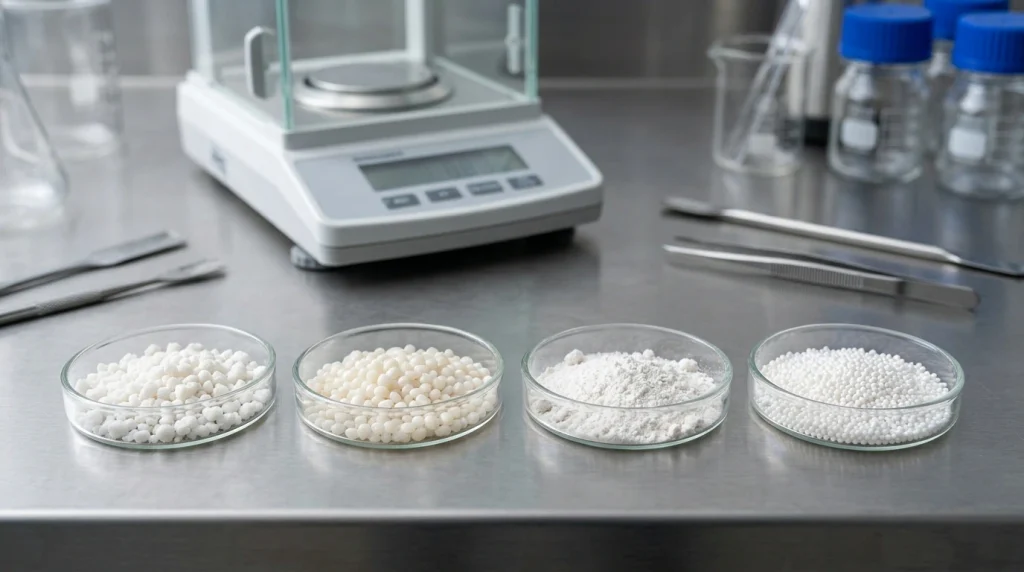
The coating decides the release point, the label and the price. A product sold as “encapsulated citric acid” can use several different shells. Ask for the coating and the acid load on the spec sheet.
| Coating | Typical release trigger | Common use |
| Hydrogenated vegetable oil (palm, cottonseed, soybean) | Heat, about 135 to 147°F (57 to 64°C). | Sausage, snack sticks, bakery. |
| Mono- and diglycerides | Heat and fat melting. | Dry mixes, confectionery. |
| Maltodextrin or gum arabic | Water and time. | Beverage powders, sour sanding. |
| Polymer or ethylcellulose | pH, temperature or slow diffusion. | Pharma, oilfield, specialty industrial. |
Acid load matters too. Commercial products usually contain about 50 to 85% citric acid by weight, with the rest being coating. A 60% grade and an 85% grade are not interchangeable at the same dose.
Why does the release range vary? Different fat blends melt at different temperatures. Always use the melt point on your supplier’s technical data sheet, not a rule of thumb from a forum.
How Encapsulated Citric Acid Differs From Regular Citric Acid
| Property | Regular citric acid | Encapsulated citric acid |
| Formula and CAS | C₆H₈O₇, 77-92-9 (anhydrous). | Same acid inside a coating. |
| Citric acid content | About 99.5 to 100% (anhydrous). | About 50 to 85%. |
| Dissolves in cold water | Yes, about 590 g/L at 20°C. | No, the shell blocks it. |
| Release timing | Immediate. | Delayed until the trigger. |
| Best for | Beverages, cleaning, canning, descaling. | Cooked meats, sour candy coatings, baked goods. |
The monohydrate form (CAS 5949-29-1) has a molecular weight of 210.14 g/mol. The anhydrous form is 192.12 g/mol. Both can be encapsulated.
Uses by Industry
1. Meat processing
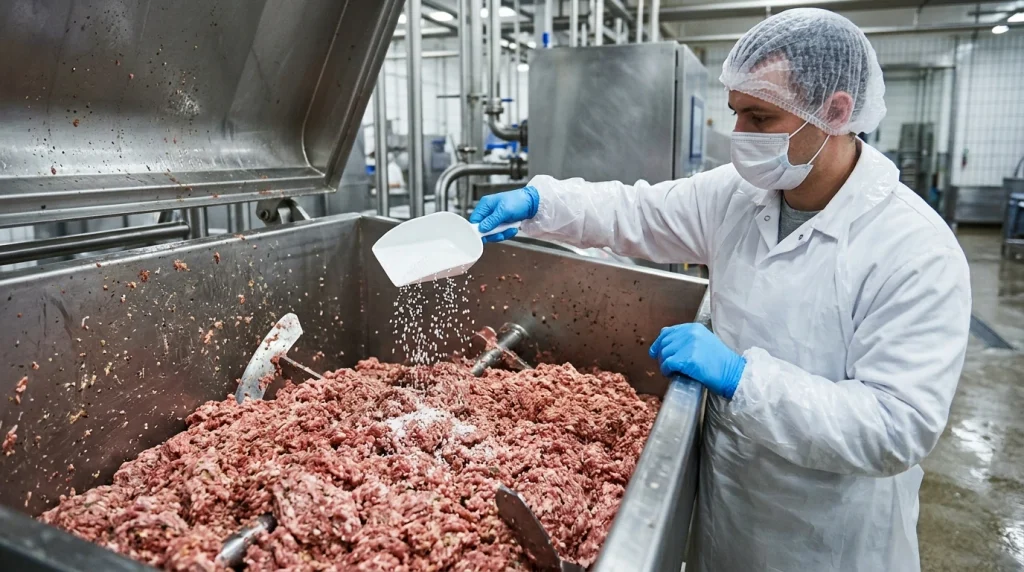
This is the biggest use. Makers of summer sausage, snack sticks, pepperoni and salami want the tangy taste of fermented products without a 24 to 72 hour fermentation. ECA gives that tang in one cooking cycle.
The delay is the whole point. If the pH falls while the meat is still raw, the proteins bind poorly and the sausage turns crumbly. With ECA, the pH drops only as the batch heats past the protein-setting stage, which is roughly 105 to 115°F (40 to 46°C).
Acid also speeds cure chemistry. A lower pH helps sodium nitrite convert to nitric oxide, which fixes the pink cured color faster. ECA never replaces the cure itself. You still need the correct amount of cure #1 for the batch.
2. Confectionery
Sour gummies and jellies are often rolled in an acid and sugar coating. Plain acid pulls moisture from the candy and turns the coating wet and sticky. Encapsulated acid stays dry longer, and it gives a slower sour build in the mouth.
Citric acid and malic acid are both sold encapsulated. Malic tends to taste sharper and linger more, while citric tastes cleaner and brighter. Many formulators blend the two.
3. Bakery and dry mixes
Acid can react with baking soda too early in a wet dough, wasting leavening before the oven. A fat-coated acid holds back until baking heat melts the shell. Dry beverage and effervescent mixes use the same idea to keep the acid from reacting during storage.
4. Pharmaceutical, nutraceutical and industrial uses
Effervescent tablets and some supplement powders use coated acid to keep moisture out and extend shelf life. Oilfield service companies also use polymer-coated acids for delayed-release acidizing treatments. Those grades are not food grade and should never be mixed up with food products.
How Much Encapsulated Citric Acid to Use
Dosage depends on the product, the fat content, the seasoning and your target pH. Most sausage makers use a range, then adjust for taste. Treat these numbers as a starting point and run a test batch.
| Goal | Per 25 lb meat | Per 100 lb meat | Per kg meat | Approx. % |
| Mild tang, target pH near 4.9 to 5.0 | 3 oz (85 g) | 12 oz (340 g) | about 7.5 g | 0.75% |
| Stronger tang, lower pH | 4 oz (113 g) | 16 oz (454 g) | about 10 g | 1.0% |
A common home shortcut is 1 level teaspoon per pound of meat, which is close to the 0.75% rate. Weigh it with a scale when you can. Volume varies with particle size and coating.
Step-By-Step Use In Sausage
- Mix the cure first: Add your cure, seasoning and water to the cold meat, and mix until sticky.
- Add ECA last: Sprinkle it in near the end and mix about one minute, just until it is even.
- Do not regrind: Grinding or long mixing cracks the shells and releases acid early.
- Stuff and cook right away: Don’t hold the batch overnight, because even a small leak adds up.
- Cook to the safe internal temperature: Follow a tested recipe and verify with a probe thermometer.
If you go below about 3 oz per 25 lb, many makers add a cure accelerator such as sodium erythorbate.
A word on shelf stability. A lower pH helps, but a shelf-stable sausage also needs the right water activity, a validated drying and cooking process, and correct cure levels. ECA alone does not make a product shelf stable. Commercial plants should follow USDA guidance and get their process validated.
Alternatives and Substitutes
Sometimes ECA is not the right tool. Each option below changes flavor and process differently.
| Option | How it acidifies | Trade-offs |
| Encapsulated citric acid | Delayed release at cooking. | Fast, consistent tang, no fermentation. |
| Regular citric acid | Immediate | Damages raw meat texture, fine for beverages and cleaning. |
| Glucono delta-lactone (GDL) | Hydrolyzes slowly into gluconic acid. | Milder tang, slower, often used in fresh and semi-dry products. |
| Starter culture | Bacteria ferment sugar into lactic acid. | Authentic flavor, needs time and temperature control. |
| Cultured buttermilk powder | Adds lactic acid. | Weaker effect, adds dairy. |
Never swap one for another gram for gram. Each has a different acid strength and release curve.
Safety, Storage and Handling
Citric acid is generally recognized as safe (GRAS) as a food additive in the US, and the coatings used in food grade ECA are also food-safe materials. Dust is an eye and airway irritant, so wear safety glasses and a dust mask when pouring bulk bags. Always follow the supplier’s safety data sheet.
- Storage: Keep it in a cool, dry place, ideally below 77°F (25°C), in a sealed container.
- Heat damage: Warm storage softens fat coatings and the powder cakes, which ruins the delayed release.
- Incompatibilities: Keep it away from strong bases, oxidizers and reducing agents.
- Spills: Sweep up dry, avoid raising dust, and wash the area with water.
Common Mistakes
| Mistake | What happens | Fix |
| Over-mixing after adding ECA | Shells crack, pH drops early, texture turns crumbly. | Add last, mix about 1 minute. |
| Regrinding the batch | Same early release. | Grind first, add ECA after. |
| Using a different acid load than the recipe | Wrong tang or pH. | Check the % citric acid on the spec sheet. |
| Storing in a hot room | Clumping and leaks. | Store cool and sealed. |
| Treating ECA as the cure | Poor color and safety risk. | Always use the correct cure amount. |
Choosing the right acidulant can make a noticeable difference to the quality, consistency and shelf life of processed products. Understanding how different ingredients behave during processing helps manufacturers achieve better results while avoiding unnecessary formulation issues. If you are sourcing ingredients for food production or other applications, ChemVexa can help you find the right chemical supplies for your requirements.
FAQs
1. Is encapsulated citric acid vegan and halal?
The acid itself is plant or fermentation derived. The coating is the question: hydrogenated plant oils are usually vegan, while some mono- and diglycerides can be animal sourced. Ask the supplier for vegan, kosher or halal certification.
2. Does encapsulated citric acid expire?
Yes, but slowly. Shelf life depends on the coating and storage temperature, and suppliers usually print a best-by date on the certificate of analysis. Cool, dry storage is what protects the shell.
3. Can ECA replace starter culture?
It can replace the tang and the faster cure, but not the fermentation flavor, and it does not change how the product dries. Many makers use ECA for speed and starter culture for depth of flavor.
4. Is encapsulated citric acid the same as the citric acid used in canning?
No. Canning uses plain citric acid, because it needs to dissolve instantly in the jar and acidify the food. Never use encapsulated acid in canning, because the shell would delay acidification and put safety at risk.