
Safety Resources
Practical, easy-to-understand safety guidance for working with chemicals — from reading Safety Data Sheets to choosing the right protective equipment and knowing what to do in an emergency.

Safety Guides
Essential guides every student, teacher, and lab worker should know — plus chemical safety data sheets.
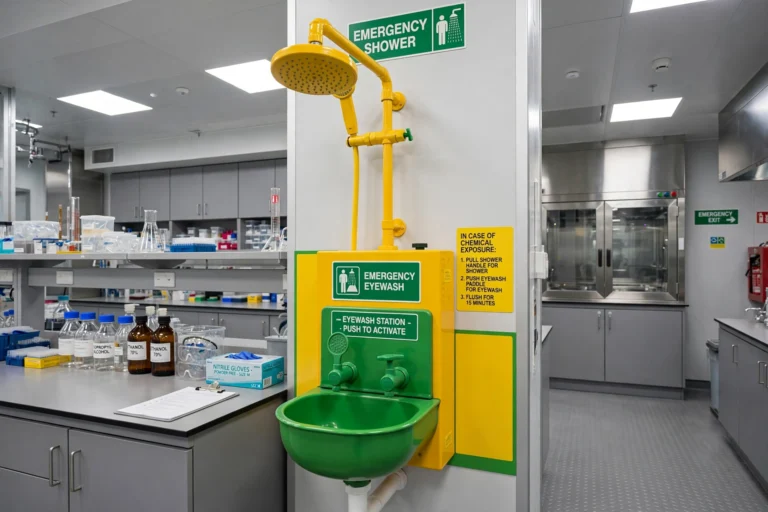
Emergency Procedures: Spills & Chemical Exposure
Eye splash, skin contact, spills, inhalation — what to do in the first 60 seconds, and where your emergency equipment is.
Read guide →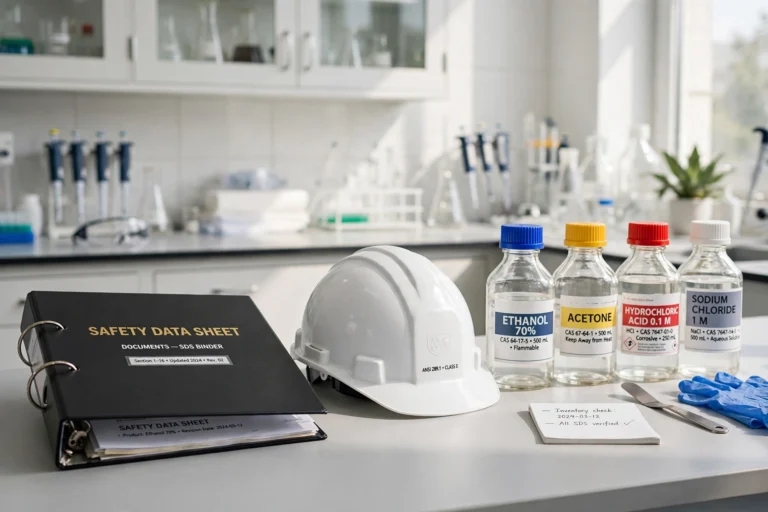
How to Read a Safety Data Sheet (SDS)
Every SDS follows the same 16-section format. Learn where to find hazards, first-aid measures, and handling instructions — in under a minute.
Read guide →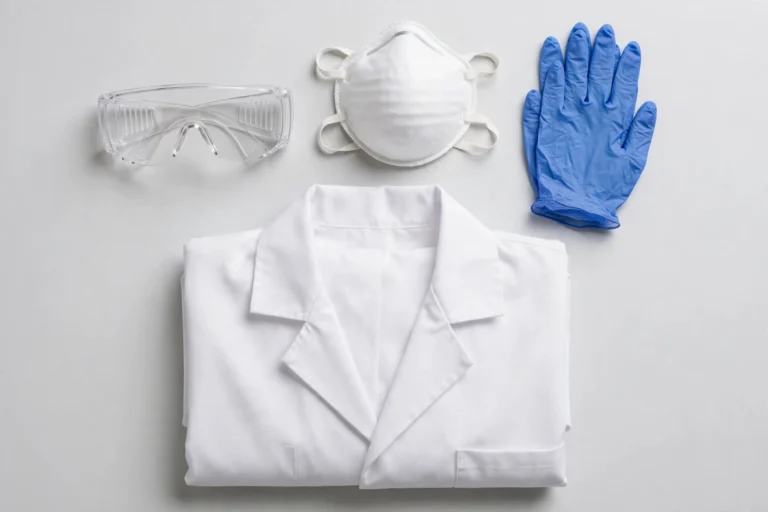
Personal Protective Equipment (PPE) Basics
Goggles, gloves, lab coats, respirators — what each protects against, and how to choose the right one for the task.
Read guide →
Safe Handling & Storage of Chemicals
Labeling, segregation, ventilation, and storage rules — the simple habits that prevent most chemical accidents.
Read guide → Sulfuric Acid — Safety Summary
H₂SO₄ (CAS 7664-93-9): corrosive strong acid. PPE, handling, storage, first aid, and spill response — summarized from the SDS.
Read guide →
What Is a Safety Data Sheet (SDS)? Essential Safety Information
If you work with, sell, store, or ship chemical products, you will run into safety data sheets sooner or later. […]
Read guide →GHS Hazard Pictograms
These red-diamond symbols appear on chemical labels worldwide. Learn to recognize them at a glance.
Flammable
Corrosive
Acute Toxicity
Irritant
Explosive
Environmental
The 6-Step Safety Checklist
Run through this list before every experiment or handling task.
Read the SDS first. Know the hazards, PPE, and first-aid measures before you open the container.
Wear the right PPE. Goggles, gloves, and lab coat as a minimum — check the SDS for specifics.
Label everything. Every container gets a name, hazard warning, and date. No exceptions.
Ensure ventilation. Work with volatile chemicals in a fume hood or well-ventilated area.
Know your emergency equipment. Locate the eyewash, safety shower, and spill kit before you begin.
Never mix unknowns. Never combine chemicals unless the reaction is documented and understood.
Official Safety References
Authoritative organizations for chemical safety standards and data.