Citric acid is commonly used for cleaning, descaling, and removing rust, but what should you do when you no longer need it? The safest disposal method depends on whether you have dry powder, a diluted solution, or liquid left over from cleaning. Some small amounts may be suitable for household disposal, while concentrated or contaminated waste requires extra care. Here’s how to dispose of citric acid powder and liquid safely.
How to Dispose of Citric Acid: Step by Step
Citric acid disposal starts with identifying whether you have dry powder, a diluted cleaning solution, or liquid left over from rust removal. Each type requires a slightly different approach, especially if the solution is concentrated or contains dissolved metals. Follow these steps to choose a suitable disposal method, handle the waste safely, and check local disposal requirements before getting rid of larger quantities.
Step 1: Identify What You Have
Work out which type of citric acid you’re dealing with, because each is disposed of differently. The key question is whether it has been used. Clean citric acid is simple to dispose of, while liquid used on metal or paint needs more care.
- Dry powder
- Dilute solution (descaler, cleaning mix)
- Strong solution (25% to 50%)
- Used liquid (rust removal, metal cleaning)
Step 2: Dispose of It by Type
Match your waste to the table and follow that method. If it doesn’t fit neatly into one row, choose the more cautious option. Wear gloves and eye protection when handling strong solutions or large amounts of powder.
| What you have | What to do |
| Small amount of powder | Seal in a bag or its container and put it in household trash. Keep it dry. |
| Dilute, clean solution | Pour down the drain with plenty of running water. |
| Strong solution | Dilute and neutralize to about pH 6 to 8, then pour away with lots of water. |
| Used or contaminated liquid | Don’t use the drain or bin. Take it to a hazardous waste site. |
| Large or bulk quantity | Use a licensed waste contractor or supplier take-back. |
Step 3: Dispose of the Container
Rinse the empty container and let it dry. Then recycle or bin it according to your local rules for that material. For industrial drums, follow the supplier’s return instructions instead of using household collection.
Step 4: Check Local Rules
Wastewater and waste regulations vary by country, state, and municipality. If you’re unsure, ask your local waste authority or water utility before disposing of anything in bulk. A quick call is cheaper than a fine or a plumbing problem.
Is Citric Acid Hazardous Waste?
In most cases, no. Citric acid is biodegradable, because microorganisms in wastewater and soil break it down into carbon dioxide and water. It has low oral toxicity and is not listed as a carcinogen by IARC, NTP, OSHA, or ACGIH.
It is still an acid, so strong solutions can irritate skin and eyes. Waste also becomes riskier once it picks up metals or other chemicals. Safety data sheets often say “do not dispose of into drains,” but that’s cautious supplier wording aimed at bulk quantities, not a spoonful of descaler.
Can You Pour Citric Acid Down the Drain?
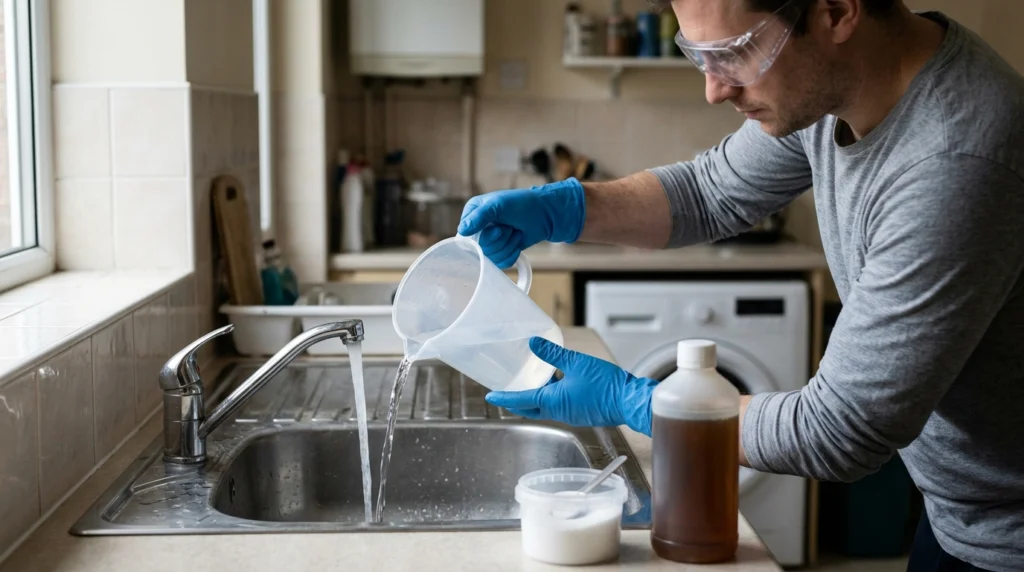
Dilute solutions, such as leftover kettle or coffee machine descaler, can go straight down the sink. Run plenty of cold water while you pour and for a short time afterward. That flushes the acid through your pipes and dilutes it further before it reaches the sewer.
Concentrated solutions should be neutralized first, because strong acid is harder on plumbing and treatment systems. Septic tanks cope fine with normal household use. Avoid dumping a large volume at once, since a big slug of acid can disturb the bacteria in the tank. Handling the concentrated form is where the chemical safety guide basics, gloves, eye protection and ventilation, earn their keep.
Can Citric Acid Go in the Trash?
Small amounts of dry powder can go in household trash. Seal it in a bag or its original container so it can’t spill or absorb moisture and turn into a sticky, slippery mess for waste collectors. This works for the amount left in a kitchen or cleaning cupboard.
Liquids should never go in the bin, and neither should large quantities. If you have a bag or drum of powder, contact a licensed waste contractor or ask the supplier about take-back.
How to Neutralize Citric Acid Before Disposal
Neutralizing brings the liquid close to neutral pH so it’s gentler on pipes and treatment systems. Work in a ventilated area with gloves and eye protection. Expect fizzing as carbon dioxide is released, so add the base slowly to stop the liquid foaming over. Done carefully, that is the whole job of neutralizing citric acid safely and accurately, whether the liquid is bound for the drain or for a process tank.
- Check the pH with test strips or a meter. A 5% solution sits around pH 1.8 to 2.
- Dilute with water if the solution is concentrated.
- Add baking soda or soda ash slowly, stirring as you go.
- Retest, and stop at roughly pH 6 to 8.
- Pour away with plenty of water.
Citric acid is triprotic, meaning each molecule releases three hydrogen ions, so full neutralization takes three equivalents of base. That works out to about 1.3 g of baking soda per 1 g of citric acid. Treat that as a rough guide and trust the pH strip over the maths.
Disposing of citric acid properly helps prevent plumbing issues and reduces the risk of releasing unwanted chemicals into the environment. Before getting rid of leftover cleaning products, check their ingredients and consider whether they contain residues from metal, paint, or other materials. Keeping chemicals clearly labelled and storing unused powder in a dry, sealed container can also make future cleaning tasks safer and reduce unnecessary waste.
FAQs
1. Can you mix citric acid with vinegar for cleaning?
Citric acid and vinegar can be combined for some cleaning tasks, but mixing them does not necessarily improve their cleaning power. Both are acidic, so avoid combining them with bleach or other cleaning products unless the manufacturer confirms it is safe.
2. How long does citric acid take to break down in water?
Citric acid dissolves readily in water, but dissolving and biodegrading are different processes. Microorganisms can break it down under suitable environmental conditions, and the time required depends on factors such as temperature and microbial activity.
3. Does citric acid damage stainless steel?
Citric acid is used to clean and passivate stainless steel, but its effects depend on concentration, temperature, contact time, and the steel grade. Rinse the surface thoroughly after cleaning and follow the manufacturer’s instructions.