
Home › Chemical Directory › Solvents › Acetone
Acetone (C₃H₆O)
Properties, Uses, Applications and Safety Information
Fast-evaporating solvent for labs, coatings and cleaning.
⚗️FormulaC₃H₆O
🔗CAS Number67-64-1
⚛️Molecular Weight58.08 g/mol
Chemical Identification
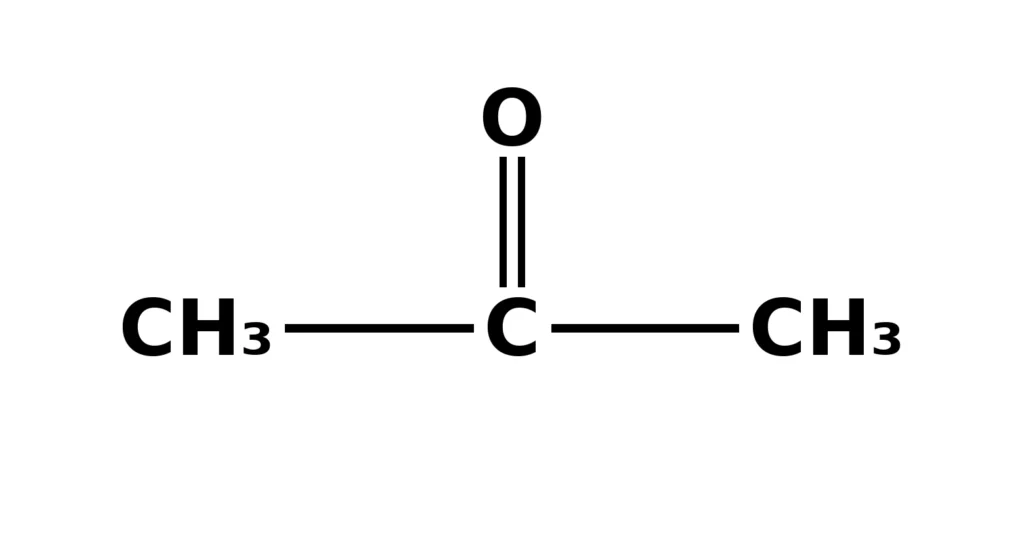
Molecular Structure (C₃H₆O)
| Chemical Name | Acetone |
| Formula | C₃H₆O |
| CAS Number | 67-64-1 |
| Molecular Weight | 58.08 g/mol |
| IUPAC Name | Propan-2-one |
| Synonyms | Propanone, Dimethyl ketone, 2-Propanone |
Physical & Chemical Properties
⚗️AppearanceClear colorless liquid
👃OdorSweet, fruity
🌡️Melting Point-93.9 °C
🔥Boiling Point56.1 °C
⚖️Density0.79 g/cm³ (at 20 °C)
💧SolubilityMiscible with water in all proportions
🧪pH (in solution)Not applicable
✨Flash Point-18 °C
🛡️StabilityStable under normal conditions; highly flammable, vapors form explosive mixtures with air
📊LogP (octanol/water)-0.24
Uses & Applications
🧪
Solvents
Dissolves paints, coatings, adhesives and resins
🏭
Laboratory
Cleaning and drying glassware; chromatography solvent
💧
Chemical Synthesis
Feedstock for methyl methacrylate and bisphenol A
🔬
Personal Care
Active ingredient in nail polish removers.
Safety & Handling
🛡️ Safety & Handling
- Highly flammable liquid and vapor; keep away from ignition sources. Vapors may cause drowsiness, dizziness and eye irritation. Store tightly closed in a cool, well-ventilated flammables area. Use chemical splash goggles and avoid static discharge during transfer.
📄
Safety Data Sheet (SDS)
View the official SDS for detailed safety information.
SDS available on request⚠️ Educational information only — always consult the chemical-specific Safety Data Sheet (SDS) and qualified professionals before handling.
Related Articles
View All Articles →


📖
Citric Acid vs Muriatic Acid: Key Differences, Strength and Best Uses
Citric acid vs muriatic acid is a choice between a mild organic acid and one of the strongest, cheapest mineral […]
Read Full Article →