If you have ever read the ingredient list on a soft drink, a cleaning product, or a pharmaceutical tablet, you have almost certainly come across citric acid. But what is citric acid powder used for beyond flavoring your lemonade?
Citric acid (C₆H₈O₇) is a weak organic tricarboxylic acid naturally found in citrus fruits. In its powdered form, it becomes one of the most versatile industrial chemicals on the planet. With a global market valued at over $4.5 billion, citric acid powder is quietly running operations in food manufacturing, pharmaceuticals, cosmetics, and heavy industrial processes every single day.
This guide breaks down citric acid powder uses across every major sector — with data, real applications, and the chemistry behind why it works.
The Chemistry Behind Citric Acid Powder
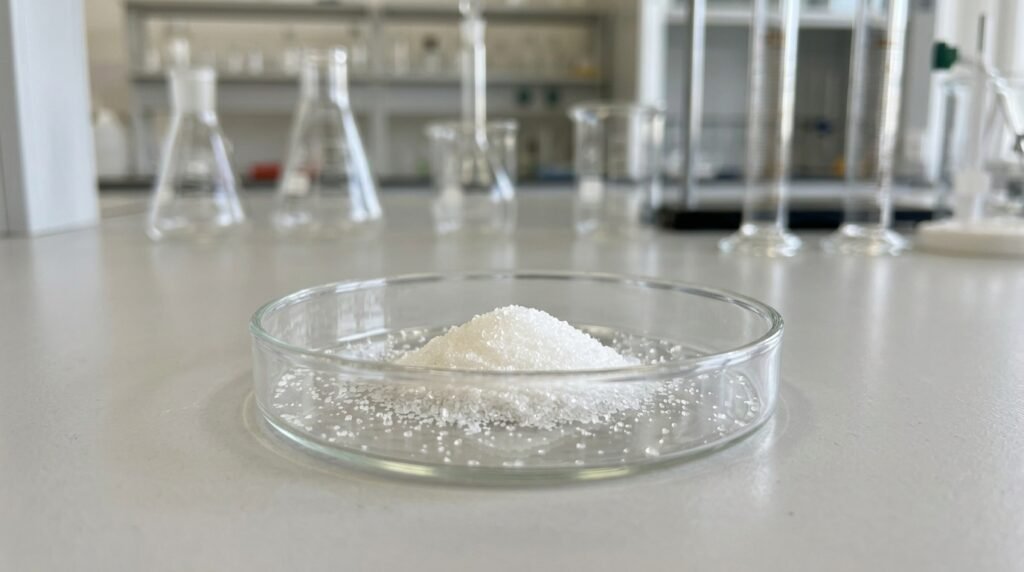
Citric acid powder is produced commercially through the fermentation of Aspergillus niger (a black mold) on sucrose or glucose substrates. The result is a white, odorless, crystalline powder that is:
- Highly soluble in water
- Non-toxic at food-grade concentrations
- Strongly acidic with a pKa of 3.13 (first dissociation)
- Biodegradable and environmentally safe
These properties make it an exceptional multitasking compound across dozens of industries.
💡 Fact: Citric acid was first isolated in 1784 by Swedish chemist Carl Wilhelm Scheele from lemon juice. Today, nearly 99% of global citric acid is produced via microbial fermentation, not from citrus fruits.
What Is Citric Acid Powder Used For? Key Industries
1. Food & Beverage Industry
The food and beverage sector consumes approximately 70% of global citric acid production. It functions as far more than just a flavoring agent.
Primary citric acid powder uses in food:
- Acidulant & pH regulator — Lowers and stabilizes pH in beverages, jams, and canned goods
- Preservative — Inhibits microbial growth by reducing water activity
- Chelating agent — Binds metal ions that cause oxidative rancidity in oils and fats
- Emulsification enhancer — Improves texture in processed cheese and dairy
- Flavor masking — Balances bitterness in pharmaceutical syrups and health drinks
| Application | Citric Acid Function | Typical Concentration |
| Carbonated beverages | Acidulant, flavor enhancer | 0.3% – 0.5% |
| Jams & fruit preserves | pH control, pectin activation | 0.1% – 0.5% |
| Processed cheese | Emulsification | 0.5% – 3.0% |
| Candy & confectionery | Sour flavor, anti-crystallization | 1.0% – 5.0% |
| Canned vegetables | Preservative, color stabilizer | 0.1% – 0.3% |
2. Pharmaceutical Industry
Citric acid powder benefits in the pharmaceutical sector are both functional and patient-facing. It plays a structural role in drug formulation, not just taste.
Key applications include:
- Effervescent tablets — Reacts with sodium bicarbonate to produce CO₂, enabling fast drug dissolution
- Buffer systems — Maintains stable pH in liquid medications and injections
- Antioxidant — Protects iron-containing compounds from oxidation in syrups
- Chelation in dialysis fluids — Prevents calcium precipitation in renal care solutions
💡 Fact: The citric acid–sodium bicarbonate effervescent reaction produces exactly one mole of CO₂ per mole of citric acid used. This precise gas evolution is why effervescent tablets dissolve rapidly and uniformly a critical performance metric in pharma manufacturing.
3. Cosmetics & Personal Care
Citric acid powder benefits in cosmetics go far beyond skincare marketing language. Its role is grounded in formulation chemistry.
How it works in personal care:
- pH adjuster — Skin’s natural pH is 4.5–5.5; citric acid brings formulations into this range
- AHA (Alpha Hydroxy Acid) — Exfoliates dead skin cells by loosening corneocyte bonds
- Antioxidant preservation — Extends shelf life of vitamin C serums and creams
- Hair cuticle smoother — Closes cuticle scales by lowering rinse pH after alkaline treatments
4. Citric Acid Uses in Industry: Cleaning & Descaling
One of the most underrated citric acid uses in industry is its power as a descaling and passivation agent. Engineers in water treatment and manufacturing know this well.
Industrial cleaning applications:
- Boiler descaling — Dissolves calcium and magnesium carbonate scale at 5–10% solutions
- Stainless steel passivation — Removes free iron from metal surfaces, forming a protective oxide layer
- Membrane cleaning in RO systems — Removes biofouling and mineral deposits without membrane damage
- Cooling tower treatment — Chelates hardness ions to prevent scale buildup
| Industrial Process | Role of Citric Acid | Benefit |
| Boiler/heat exchanger descaling | Dissolves CaCO₃ and MgCO₃ scale | Improves heat transfer efficiency |
| Stainless steel passivation | Removes free iron, promotes oxide layer | Enhances corrosion resistance |
| RO membrane cleaning | Chelates fouling minerals | Restores membrane flux |
| Food processing CIP systems | Low-pH cleaner, rinse-safe | Safe for food-contact surfaces |
| Textile dyeing | pH control during dyeing process | Uniform color absorption |
5. Agriculture & Soil Treatment
Citric acid powder is gaining traction in agricultural chemistry, especially in precision farming.
- Enhances micronutrient bioavailability in iron-deficient soils by chelating Fe³⁺ ions
- Improves solubility of phosphate fertilizers in alkaline soils
- Used as a foliar spray additive to improve nutrient uptake
- Acts as a natural soil acidifier in high-pH growing media
6. Water Treatment
Municipal and industrial water treatment facilities use citric acid as part of chemical dosing systems.
- Controls scale formation in pipelines and membranes
- Adjusts pH during coagulation and flocculation processes
- Used in ion exchange resin regeneration
- Biodegradable alternative to phosphate-based antiscalants
Citric Acid Powder Benefits: A Summary
Here is why engineers and formulators continue to choose citric acid over competing alternatives:
- ✅ GRAS (Generally Recognized As Safe) by the FDA
- ✅ Kosher and Halal certified in food-grade form
- ✅ Biodegradable — does not accumulate in environmental systems
- ✅ Non-corrosive at standard working concentrations
- ✅ Multifunctional — one ingredient, multiple process roles
- ✅ Cost-effective — widely available and competitively priced
- ✅ Compatible with most excipients, polymers, and active ingredients
Quality Grades of Citric Acid Powder
Not all citric acid powder is identical. The grade used depends strictly on the application:
- Food Grade (FCC) — Meets Food Chemicals Codex standards; used in beverages, food, and dietary supplements
- Pharmaceutical Grade (USP/BP) — Meets United States Pharmacopeia or British Pharmacopoeia standards; used in drug manufacturing
- Technical/Industrial Grade — Used in cleaning agents, descalers, and non-consumable applications
Selecting the wrong grade is a quality compliance issue. A food manufacturer sourcing technical-grade citric acid risks regulatory violations and product recalls.
Safety & Handling Considerations
From a chemical engineering standpoint, citric acid powder is low-hazard but not zero-hazard. Proper handling includes:
- Wear dust masks and safety glasses — fine powder is a mild respiratory and eye irritant
- Store in cool, dry conditions away from moisture (it is hygroscopic)
- Keep away from strong oxidizers and bases
- Ensure adequate ventilation in bulk handling areas
- Follow local SDS (Safety Data Sheet) guidelines for industrial quantities
One Compound, Countless Applications
Understanding what citric acid powder is used for means recognizing it as far more than a kitchen ingredient. It is a precision chemical tool one that food technologists rely on for shelf stability, pharmacists depend on for drug delivery, engineers trust for descaling operations, and cosmetic chemists use to balance formulations.
Its combination of safety, biodegradability, multifunctionality, and cost-effectiveness makes citric acid powder a cornerstone of modern industrial chemistry. Whether you are a student studying formulation science, an educator building a curriculum around industrial chemicals, or a plant engineer optimizing a cleaning protocol citric acid powder deserves a much deeper look than its simple white crystalline appearance suggests.
FAQs
1. How does citric acid powder affect shelf life in packaged foods?
Citric acid slows down spoilage by lowering pH and inhibiting microbial growth while also preventing oxidation by binding metal ions that trigger rancidity, making it highly effective in extending the shelf life of processed and packaged foods.
2. Can citric acid powder be used in biodegradable cleaning formulations?
Yes, it is widely used in eco-friendly cleaners because it is biodegradable and can break down mineral deposits without leaving harmful residues, making it a safer alternative to harsh chemical descalers.
3. What role does citric acid powder play in fermentation processes?
Citric acid acts as a pH regulator during controlled fermentation, helping maintain optimal acidity which stabilizes microbial activity and ensures consistent product quality in industrial processes.
4. Is citric acid powder useful in metal surface preparation?
It is used for mild etching and cleaning of metal surfaces by removing oxidation and contaminants, which improves coating adhesion and enhances overall surface treatment efficiency.
5. How does citric acid powder interact with hard water minerals?
Citric acid binds calcium and magnesium ions through chelation, preventing scale buildup in pipes and equipment while improving system efficiency and reducing maintenance requirements.