Citric acid is a cheap, powerful descaler that breaks down limescale, soap scum, and mineral stains around your home. The trick is getting the mix right. Too weak and it does nothing, too strong and it can damage surfaces. This guide walks you through every step, even if you have never mixed a cleaner before.
What You Need Before You Mix
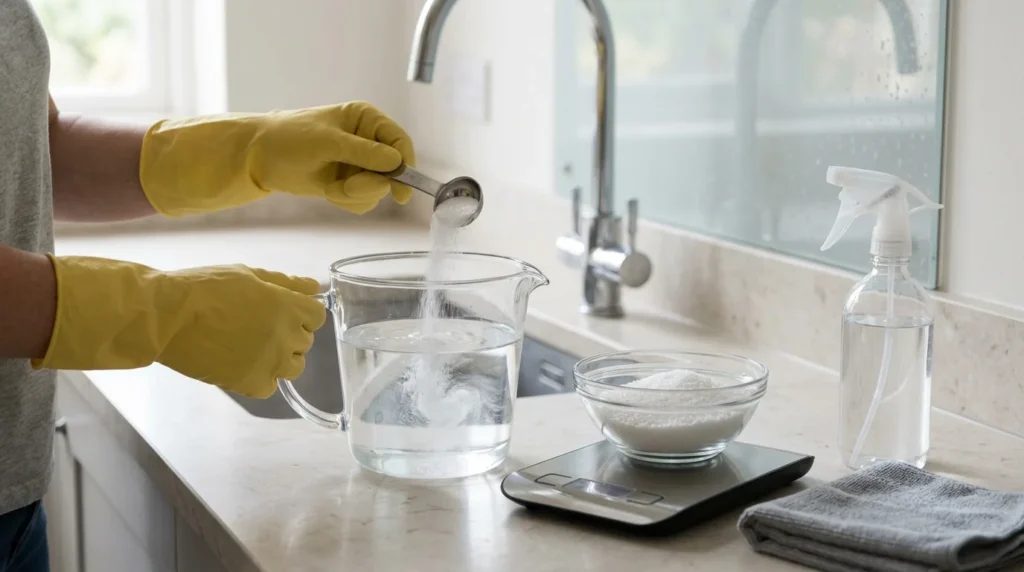
Gather everything first so you are not hunting for tools with acid on your hands. Most of these items are already in a normal kitchen. Having them laid out on the counter makes the whole process faster, safer, and far less messy.
- Citric acid powder: Food-grade is fine. It looks like white sugar crystals.
- Warm water: Comfortable to touch, not boiling.
- Measuring spoons or a kitchen scale: A scale is more accurate.
- A clean spray bottle or container: Rinse it well before use.
- Rubber gloves: Any household cleaning gloves work.
- A permanent marker and a label or tape: For naming the bottle.
- A funnel and a spoon: The funnel prevents spills and the spoon is for stirring.
How to Mix Citric Acid with Water: Step by Step
In this example, we make 500 ml of a 5% solution, which suits most everyday cleaning jobs. It is strong enough to cut through limescale and soap scum, but gentle enough for regular use. You can scale the amounts up or down using the ratio chart below.
Step 1: Put on Gloves and Open a Window
Citric acid is mild, but the dry powder is fine and can irritate your skin, eyes, and nose. Put your gloves on before you open the bag. Then open a window or switch on a fan so fresh air keeps moving while you work.
- Don’t touch your face while wearing the gloves.
- If powder gets in your eyes, rinse with clean water for several minutes.
Step 2: Measure the Citric Acid Powder
Place a clean, dry bowl on your kitchen scale and press “tare” so it ignores the bowl’s weight. Pour in 25 g of powder. No scale? Use 2 level tablespoons, scraping the top flat with a knife instead of heaping the spoon.
- Spoon measures vary, so a scale is more reliable.
- Use dry spoons only, as damp ones make the powder clump.
Step 3: Measure the Warm Water
Pour 500 ml of warm water into a clean jug. It should feel pleasantly warm on your wrist, around 40–50°C. Warm water dissolves the powder much faster than cold water does.
- Never use boiling water in a plastic bottle, as it can warp or crack.
- Cold water works too, but you will need to stir longer.
Step 4: Add the Powder to the Water
Slowly sprinkle the powder into the water, not the other way round. This stops it from clumping at the bottom and keeps dust out of the air. Pour gently and keep your face back from the jug.
- Don’t dump it all in at once.
- Fizzing or bubbling is not normal. If you see it, something else is in your container, so stop and rinse it out.
Step 5: Stir Until Fully Dissolved
Stir with a clean spoon for 30–60 seconds. Hold the jug up to the light and check that the liquid is completely clear. If you still see crystals floating or sitting at the bottom, keep stirring a little longer.
- Undissolved grains clog spray nozzles.
- They can also leave white, gritty marks on surfaces.
Step 6: Pour into a Clean Spray Bottle or Container
Place a funnel in the bottle neck and pour the solution in slowly. Stop before the bottle is completely full so the cap closes properly. Close the lid firmly and test the spray once over the sink.
- Never reuse a bottle that held bleach or ammonia, as leftover residue can react.
- Keep it away from food containers to avoid mix-ups.
Step 7: Label the Bottle
Write three things on the label: “Citric Acid Cleaner,” the strength (5%), and today’s date. Stick it on the bottle where it won’t peel off when wet. This stops anyone from mistaking it for water or another product. When a labelled bottle finally outlives its use, the leftover solution and powder can be disposed of safely instead of poured away carelessly.
- Use the solution within 2–4 weeks.
- Throw it out if it looks cloudy or smells musty, as mold can grow over time.
Step 8: Apply, Wait, and Rinse with Clean Water
Spray the surface evenly until it is wet, then leave it for the right contact time (see the table below). After that, wipe with a cloth and rinse with clean water. Finish by drying with a soft cloth to prevent water spots.
- Never let the acid dry on the surface.
- Rinsing is essential, as leftover acid can dull or etch finishes.
Citric Acid to Water Ratio Chart (5% to 10% Solutions)
Use this chart to pick the right strength for your job. Start with the lightest solution that works, and only go stronger if the stain does not shift. Spoon measures are approximate, so use a scale if you want accuracy.
| Strength | Per 250 ml water | Per 500 ml water | Per 1 litre water | Best for |
| 5% (light) | 12.5 g (about 1 tbsp) | 25 g (about 2 tbsp) | 50 g (about 4 tbsp) | Daily sprays, glass, kettles |
| 7.5% (medium) | 19 g (about 1.5 tbsp) | 37.5 g (about 3 tbsp) | 75 g (about 6 tbsp) | Bathrooms, taps, appliances |
| 10% (strong) | 25 g (about 2 tbsp) | 50 g (about 4 tbsp) | 100 g (about 8 tbsp) | Heavy limescale, rust |
How to Mix Citric Acid for Different Cleaning Jobs
Different jobs need different strengths and contact times. A glass spray needs a light mix, while rust and thick limescale need a stronger one. The sections below give you the exact amounts and steps for each common job.
1. Spray Cleaner for Bathroom, Sinks, and Glass
Mix a 5% solution, which is 1 tablespoon of powder per 250 ml of warm water. It cuts through soap scum and water spots and leaves glass streak-free. It is gentle enough to use weekly on most bathroom surfaces.
- Dissolve the powder fully and pour it into a spray bottle.
- Spray the surface and wait 5 minutes.
- Wipe with a damp cloth, rinse, and buff dry with microfiber.
2. Kettles and Faucets (Light Descaling)
For a kettle, fill it halfway with water, add 1–2 tablespoons of powder, and boil. Switch it off and let it sit for 15–30 minutes. Pour the water out, then boil a full kettle of clean water and discard it to remove any aftertaste.
For faucets, soak a cloth in a 5% solution and wrap it around the tap. Leave it for 20–30 minutes so the acid can soften the scale. Then wipe the tap, rinse with clean water, and dry it to keep it shiny.
3. Heavy-Duty Limescale
Use a 10% solution, which is 100 g of powder per litre of water. It tackles thick deposits on shower heads, tiles, and taps. Because it is strong, wear gloves and eye protection, and keep the room ventilated.
- Unscrew removable parts like shower heads and submerge them in a bowl of solution.
- For fixed surfaces, soak a cloth or paper towel in the solution and press it onto the scale.
- Wait 30 minutes to a few hours, scrub gently with a soft brush, and rinse.
- Repeat if the scale is very thick.
4. Washing Machines and Dishwashers
Dissolve 50–100 g of powder in a jug of warm water, then pour it into the empty drum or dispenser. Run a hot cycle with no laundry or dishes inside. This clears limescale from heating elements and pipes, helping your machine run better and last longer.
- Check your appliance manual first, as some manufacturers advise against acids.
- Wipe the door seal and rinse the dispenser after the cycle.
5. Fabric Softener
Mix a 5% solution and pour about ¼ cup into the fabric softener compartment before washing. It helps remove detergent residue and mineral buildup from hard water. Clothes come out softer, and towels feel less stiff.
- Skip it for delicate fabrics unless the label allows it.
- Never pour it in with bleach.
6. Rust Removal
Mix a 10% solution in a plastic or glass container, as metal containers can react with the acid. Submerge the rusty item completely. This works well for small tools, bolts, and metal parts, but check progress often so the metal is not damaged.
- Soak for 1–6 hours, checking every 30–60 minutes.
- Scrub lightly with a brush or sponge.
- Rinse with clean water and dry immediately to stop new rust forming.
How Long to Leave the Solution on Surfaces
Contact time is how long the solution stays on a surface before you wipe it off. Too short and the scale will not loosen, too long and you risk dulling the finish. Use this table as a guide and check the surface as you go.
| Job | Contact time |
| Glass and light sprays | 2–5 minutes |
| Bathroom and sinks | 5–15 minutes |
| Kettles and taps | 15–30 minutes |
| Heavy limescale | 30 minutes to a few hours |
| Rust removal | 1–6 hours (check often) |
Safety Tips: Gloves, Ventilation, and Rinsing
Citric acid is far milder than most chemical cleaners, but it is still an acid. A few simple habits keep you and your surfaces safe. They take seconds and prevent most of the common problems.
- Wear gloves and eye protection, especially with 10% solutions.
- Ventilate the room when mixing or spraying.
- Rinse every surface with clean water after cleaning.
- Test on a small hidden spot before cleaning a new surface.
- Keep the bottle labeled and out of reach of kids and pets.
- Avoid natural stone like marble and granite, as acid will etch it.
What Not to Mix Citric Acid With
Mixing cleaning products can create dangerous fumes or cancel out the cleaning power. Citric acid should only ever be mixed with water. If you want to use another product, use it separately and rinse the surface well in between.
- Bleach: releases toxic chlorine gas.
- Baking soda: neutralizes both, so you get a fizz but no cleaning power.
- Ammonia cleaners: can create harmful fumes.
- Hydrogen peroxide: can form corrosive compounds.
- Other commercial cleaners: unknown reactions are never worth the risk.
How to Mix Citric Acid for Lab and Classroom Use
In labs, strength is measured in molarity rather than percentages. Anhydrous citric acid has a molar mass of about 192 g/mol. Use the table below to prepare common concentrations, and always weigh the acid accurately on a lab scale.
| Concentration | Anhydrous citric acid per 1 litre of water |
| 0.1 M | 19.2 g |
| 0.5 M | 96 g |
| 1 M | 192 g |
- Put on goggles, gloves, and a lab coat.
- Weigh the acid accurately on a lab scale.
- Add it to about 80% of the final water volume (distilled water is best) and stir until dissolved.
- Top up with water to the final volume and mix again.
How to Mix Citric Acid for Boilers, Tanks, and Industrial Equipment
Industrial descaling usually uses a 2–5% solution, often heated and combined with corrosion inhibitors. Wrong concentrations or temperatures can damage metal, so always follow the equipment manufacturer’s guidelines. Large systems should be handled by a trained professional.
- Flush the system with clean water afterward.
- Dispose of used solution according to local regulations.
Choosing the right cleaning solution can make everyday household tasks easier, especially when dealing with stubborn mineral deposits and residue. Understanding how water temperature, solution strength and contact time affect cleaning helps you get better results while protecting different surfaces. A few simple precautions can also help prevent unwanted damage and keep your cleaning routine safe and effective.
FAQs
1. Does citric acid remove hard water stains from glass?
Citric acid can help dissolve mineral deposits left by hard water on glass shower screens and windows. Apply a diluted solution briefly, wipe with a soft cloth and rinse thoroughly. Avoid letting the solution dry on the glass, as this may leave residue.
2. Can citric acid remove soap scum from shower tiles?
Citric acid can help loosen soap scum and mineral residue on acid-resistant tiles. Use a mild solution and a non-abrasive sponge, then rinse the surface well. Avoid natural stone tiles because acidic cleaners can damage their finish.
3. Is citric acid better than vinegar for cleaning limescale?
Both citric acid and vinegar can dissolve limescale because they are acidic. Citric acid powder offers more control over solution concentration, while vinegar is ready to use in liquid form. The better option depends on the surface, deposit concentration and required dilution.
4. How do you remove white mineral deposits from a shower screen?
Apply a suitable citric acid solution to the affected glass, allow a short contact time and wipe gently with a soft cloth. Rinse with clean water and dry the screen to reduce water marks. Check any protective glass coating manufacturer’s instructions first.
5. Can citric acid clean a toilet bowl?
Citric acid may help loosen mineral rings and limescale inside a toilet bowl. Apply an appropriate solution, allow time for the deposits to soften and scrub with a toilet brush before flushing. Never use it alongside bleach or other toilet cleaners.