
Home › Chemical Directory › Biochemicals › Urea
Urea (CO(NH₂)₂)
Properties, Uses, Applications and Safety Information
Nitrogen compound central to fertilizers and biochemistry.
⚗️FormulaCO(NH₂)₂
🔗CAS Number57-13-6
⚛️Molecular Weight60.06 g/mol
Chemical Identification
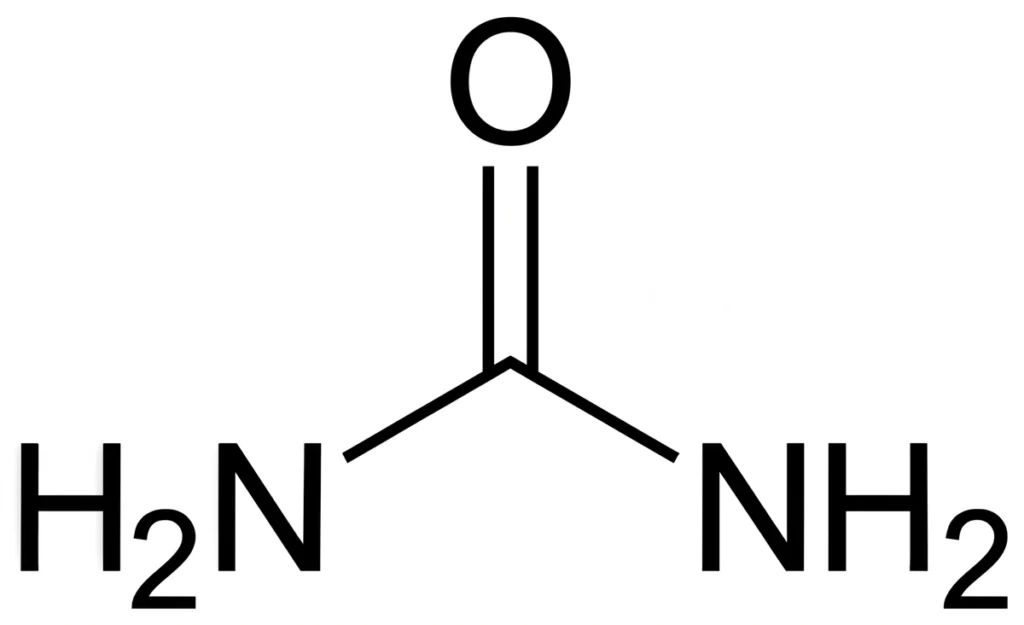
Molecular Structure (CO(NH₂)₂)
| Chemical Name | Urea |
| Formula | CO(NH₂)₂ |
| CAS Number | 57-13-6 |
| Molecular Weight | 60.06 g/mol |
| IUPAC Name | Urea |
| Synonyms | Carbamide, Carbonyldiamide |
Physical & Chemical Properties
⚗️AppearanceWhite crystalline solid
👃OdorOdorless
🌡️Melting Point132.7 °C
🔥Boiling PointDecomposes before boiling
⚖️Density1.34 g/cm³ (at 20 °C)
💧SolubilityVery soluble in water (108 g per 100 mL at 20 °C)
🧪pH (in solution)7.2 (10% solution)
✨Flash PointNot flammable
🛡️StabilityStable under normal conditions; decomposes on heating to biuret and ammonia
📊LogP (octanol/water)-2.11
Uses & Applications
🧪
Fertilizers
Highest-nitrogen solid fertilizer (46% N) for crops
🏭
Resins & Plastics
Urea-formaldehyde resins, adhesives and plywood glues
💧
Automotive
Reduces NOx emissions as AdBlue (DEF) in diesel SCR systems
🔬
Pharma & Cosmetics
Keratolytic creams and skin rehydration formulations.
Safety & Handling
🛡️ Safety & Handling
- Low hazard under normal conditions of use. Dust may irritate the eyes and airways during prolonged handling. Store dry; strong heating decomposes it to biuret and ammonia. Use a dust mask and safety glasses for bulk handling.
📄
Safety Data Sheet (SDS)
View the official SDS for detailed safety information.
SDS available on request⚠️ Educational information only — always consult the chemical-specific Safety Data Sheet (SDS) and qualified professionals before handling.
Related Articles
View All Articles →


📖
Citric Acid vs Muriatic Acid: Key Differences, Strength and Best Uses
Citric acid vs muriatic acid is a choice between a mild organic acid and one of the strongest, cheapest mineral […]
Read Full Article →