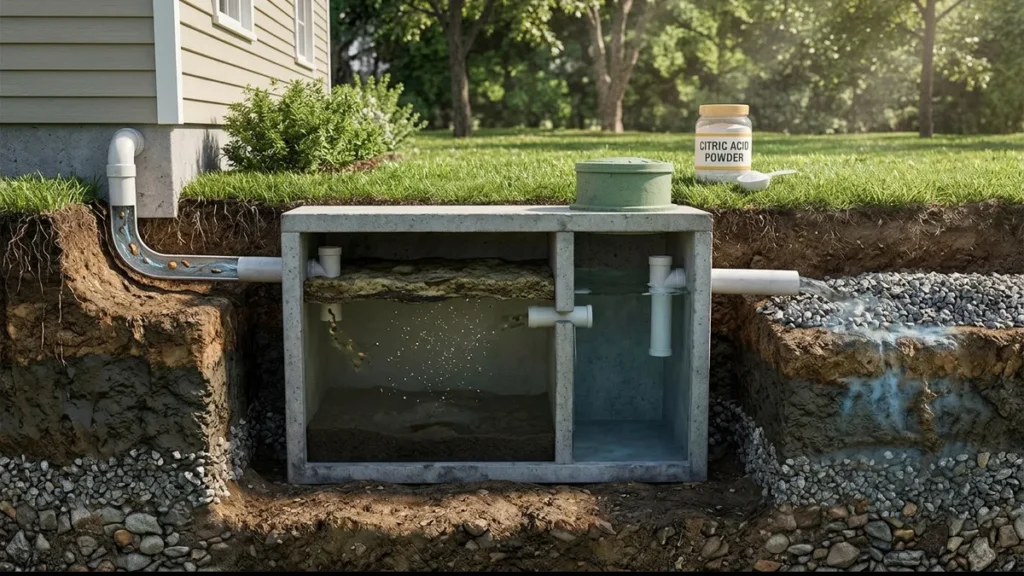
Citric acid is commonly used for household cleaning, but is it safe to use if your home relies on a septic tank? The good news is that citric acid is generally septic-safe when used in normal household amounts.
However, the quantity, frequency of use and other cleaning products it comes into contact with can affect your septic system. Understanding how citric acid behaves in a septic tank can help you clean effectively without disturbing its natural bacterial balance.
Why Citric Acid Is Safe for a Septic System
Citric acid is not a foreign chemical to bacteria. It is a natural acid found in citrus fruit and in the cells of nearly every living thing, where it is part of the Krebs cycle. Many microbes can use it as food, even in the oxygen-free conditions inside a septic tank.
It is also a weak acid. Its three pKa values are about 3.13, 4.76 and 6.40, so it gives up its acidity in steps and ends up as citrate, which is far gentler. A 1% solution has a pH of about 2.3, which sounds sharp, but the wastewater it lands in is buffered.
That buffer is the main protection. Household wastewater carries bicarbonate alkalinity that soaks up acid before the pH can move far. Septic bacteria work best near neutral, roughly pH 6.5 to 7.5, and a small dose of citric acid stays inside that range.
| Property | Value |
|---|---|
| Formula | C₆H₈O₇ (anhydrous) |
| CAS number | 77-92-9 |
| Molecular weight | 192.12 g/mol (anhydrous), 210.14 g/mol (monohydrate) |
| Acid strength | Weak, pKa 3.13 / 4.76 / 6.40 |
| Breakdown | Readily biodegradable |
| Special action | Chelates calcium, magnesium and iron |
How Much Citric Acid Is Safe for Septic Tanks
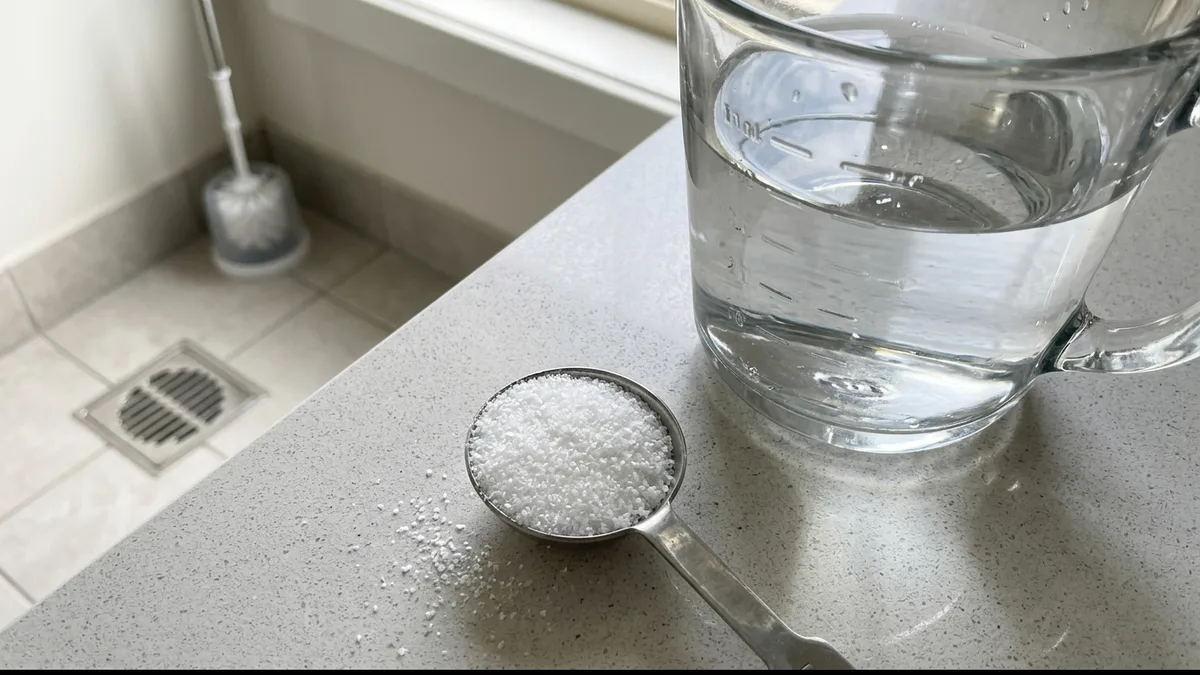
The safe amount depends on how much acid arrives and how fast. The table shows common jobs and the share of the tank’s buffer each one could use if poured in all at once. It assumes a 1,000 gallon (3,785 L) tank and alkalinity of about 200 mg/L as CaCO₃, and counts all three acidic protons.
| Job | Citric acid used | Buffer share (worst case) | Verdict |
|---|---|---|---|
| Toilet bowl cleaning | 1 to 2 tablespoons (about 12 to 25 g) | about 3% | Safe |
| Kettle or coffee maker descaling | 1 to 2 tablespoons per full reservoir | under 3% | Safe |
| Dishwasher or washing machine cycle | ¼ to ½ cup (about 50 to 100 g) | 3% to 10% | Safe, one cycle at a time |
| Tankless water heater flush | About 1 gallon of 5% solution (about 190 g) | about 20% | Safe with slow discharge |
| Bulk cleaning | 1 kg or more | roughly the whole buffer | Avoid, ask a septic professional |
These figures are estimates, since alkalinity changes with your water supply. In real use the impact is smaller, because incoming water keeps topping up the buffer. As a working rule, keep any single discharge well under 10% of the buffer and space bigger jobs apart.
How to Discharge a Descaling Solution Safely
Heater and boiler flushes are the one job that needs a method. Follow these steps so the acid is diluted and the pH dip stays short:
- Mix correctly: Dissolve citric acid in warm water to about 5% (roughly 50 g per liter) before use.
- Run the flush: Circulate the solution through the equipment for the time the manufacturer recommends.
- Rinse first: Flush the unit with clean water, because this removes most of the remaining acid.
- Drain slowly: Let the spent liquid empty gradually while cold water runs down the same drain.
- Wait between jobs: Leave a day before the next large discharge, such as a washing machine cleaning cycle.
Spent solution carries dissolved calcium citrate and sometimes traces of metals from the scale. Small volumes are harmless, and slow draining keeps it that way.
What to Avoid With a Septic Tank
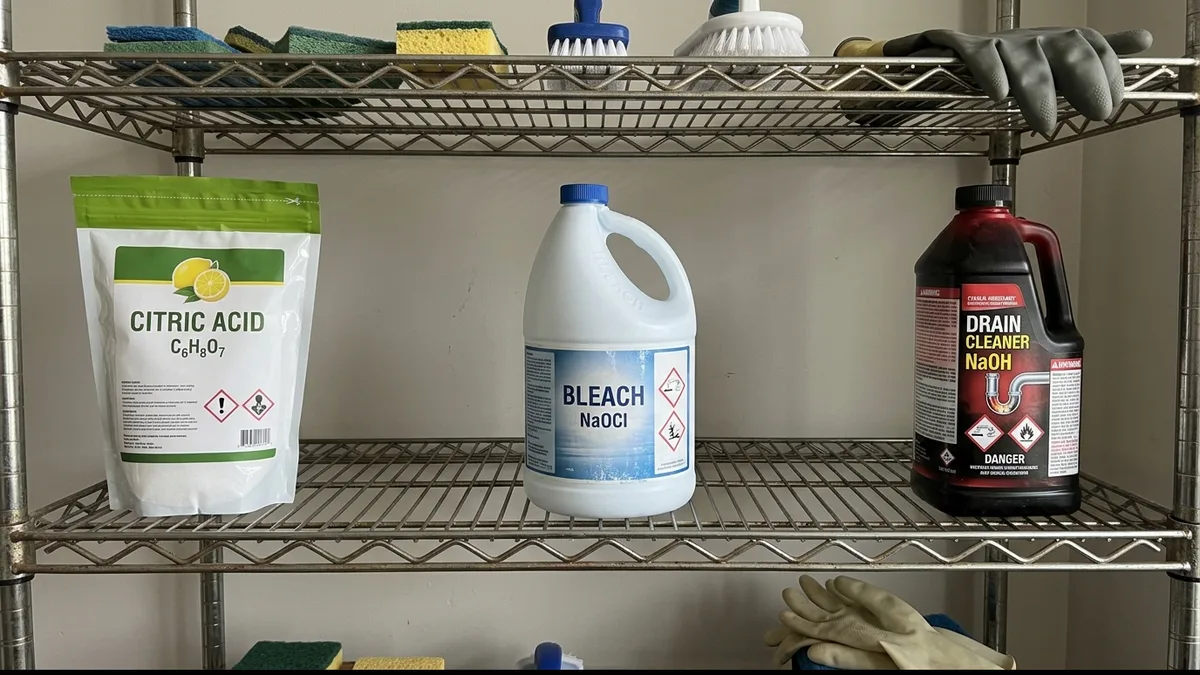
Citric acid itself is gentle. The risks come from what it is combined with or how it is dumped:
- Bleach: Acids and sodium hypochlorite release chlorine gas, so never mix them or flush them close together. Large amounts of bleach also kill tank bacteria directly.
- Caustic drain cleaners: Citric acid plus sodium hydroxide produces heat in the pipe. Use one product at a time.
- Bulk dumping: Several kilograms of solution can overwhelm the buffer, drop the pH and slow digestion for days.
- Aerobic treatment units: These systems can be more sensitive than a conventional tank, so check the manufacturer’s guidance before any large flush.
Citric Acid vs Other Cleaners for Septic Systems
Septic owners usually weigh citric acid against vinegar, strong acids and bleach. The right pick depends on the job and the risk.
| Cleaner | Main chemical | Septic risk | Best use |
|---|---|---|---|
| Citric acid | C₆H₈O₇ | Low | Limescale, toilets, appliances |
| White vinegar (5%) | Acetic acid, CH₃COOH | Low | Light stains, glass |
| Muriatic acid | Hydrochloric acid, HCl | High | Not for routine septic use |
| Typical toilet bowl cleaners | HCl, sodium bisulfate or bleach | Medium to high | Check the label |
| Bleach | Sodium hypochlorite, NaOCl | High in volume | Occasional small-scale disinfecting |
Citric acid beats vinegar on limescale because it chelates calcium directly, so you need less product. It beats mineral acids because it is far less corrosive and breaks down on its own.
Choosing a Citric Acid Product for a Septic Household
The molecule is identical in every grade, so grade does not change how it behaves in a tank. It changes purity, and purity matters because you want nothing extra reaching the system. Look for pure citric acid, not a cleaning blend with added surfactants, fragrance or bleach-based boosters.
| Grade | Standard | Good for |
|---|---|---|
| Food grade | FCC or USP | Home descaling, toilets, kettles |
| Technical grade | Industrial specification | Equipment and larger cleaning jobs |
| Anhydrous | Higher strength | Dose by weight |
| Monohydrate | About 8.5% water by weight | Use slightly more to match anhydrous |
Citric acid powder irritates eyes and airways, so wear safety glasses and gloves when pouring or mixing. Store it sealed, cool and dry, because it absorbs moisture and cakes. Keep it away from bleach, oxidizers and strong bases, and follow the supplier’s SDS.
Maintaining a healthy septic system starts with choosing cleaning products that work effectively without upsetting its natural balance. Pure citric acid offers a practical option for everyday descaling and household cleaning, provided it is used in sensible amounts and handled correctly. Choosing the right grade and avoiding incompatible cleaning chemicals can make a difference to long-term system care. Chemvexa is a chemical platform whose catalog carries citric acid with its formula, specifications, grades and safety notes, backed by guides that explain how chemicals are used, handled and stored safely.
FAQs
1. Does citric acid clean or unclog a septic tank?
No. It dissolves limescale on fixtures and equipment, but it does not break down sludge or clear a blocked drain field. Regular inspection and pumping on your local schedule are what protect a tank.
2. Can citric acid damage the tank or pipes?
Not at household doses. PVC and ABS pipe handle diluted citric acid well. Concrete is the exception: a strong solution or spilled powder left on a concrete lid can etch the surface, so rinse any spill.
3. Can I use lemon juice instead of citric acid?
For light cleaning, yes. Lemon juice contains roughly 5% to 9% citric acid, but it also carries sugars and pulp, so it is weaker and messier. For scale removal, pure citric acid gives more predictable results.
4. How is citric acid different from the sodium citrate in some cleaners?
Sodium citrate is the salt of citric acid and is nearly pH neutral. It acts as a builder and chelating agent rather than an acid, so it has even less effect on tank pH.