
Home › Chemical Directory › Organic Chemicals › Ethanol
Ethanol (C₂H₅OH)
Properties, Uses, Applications and Safety Information
Versatile alcohol used as solvent, disinfectant and fuel additive.
⚗️FormulaC₂H₅OH
🔗CAS Number64-17-5
⚛️Molecular Weight46.07 g/mol
Chemical Identification
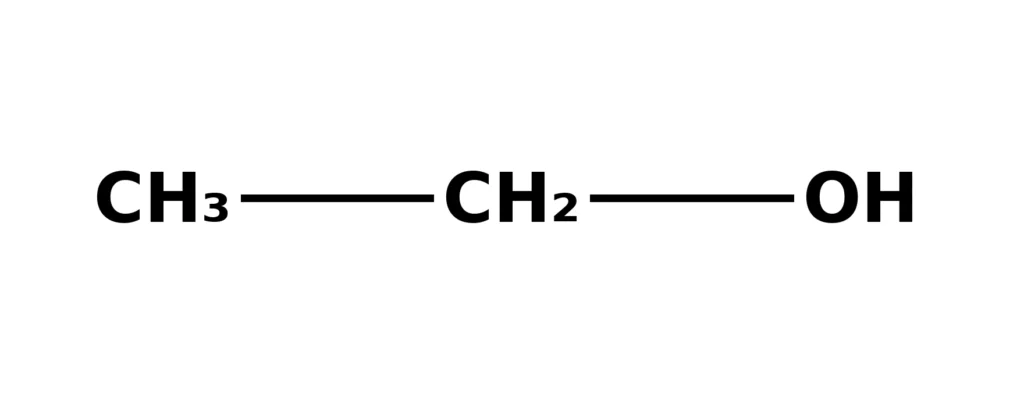
Molecular Structure (C₂H₅OH)
| Chemical Name | Ethanol |
| Formula | C₂H₅OH |
| CAS Number | 64-17-5 |
| Molecular Weight | 46.07 g/mol |
| IUPAC Name | Ethanol |
| Synonyms | Ethyl alcohol, Grain alcohol |
Physical & Chemical Properties
⚗️AppearanceClear colorless liquid
👃OdorPleasant, mild alcoholic
🌡️Melting Point-114.1 °C
🔥Boiling Point78.5 °C
⚖️Density0.79 g/cm³ (at 20 °C)
💧SolubilityMiscible with water in all proportions
🧪pH (in solution)About 7 (neutral)
✨Flash Point13 °C
🛡️StabilityStable under normal conditions; highly flammable
📊LogP (octanol/water)-0.31
Uses & Applications
🧪
Fuel
Blended into gasoline as E10 and E85 and used as an octane-boosting oxygenate
🏭
Disinfection
Hand sanitizers and surface disinfectants at about 70% strength
💧
Solvents
Dissolves tinctures, perfumes, inks and coatings
🔬
Chemical Synthesis
Feedstock for ethyl acetate, ethylene and acetaldehyde.
Safety & Handling
🛡️ Safety & Handling
- Highly flammable liquid and vapor; keep away from open flames and sparks. Denatured grades are harmful if swallowed; avoid inhaling vapors. Store in a cool, ventilated flammables cabinet away from oxidizers. Wear safety glasses and gloves for bulk handling.
📄
Safety Data Sheet (SDS)
View the official SDS for detailed safety information.
SDS available on request⚠️ Educational information only — always consult the chemical-specific Safety Data Sheet (SDS) and qualified professionals before handling.
Related Articles
View All Articles →


📖
What Not to Mix With Citric Acid
Citric acid (C₆H₈O₇, CAS 77-92-9) is one of the safer acids you can buy. It is also easy to misuse, […]
Read Full Article →