
Home › Chemical Directory › Inorganic Chemicals › Ammonia
Ammonia (NH₃)
Properties, Uses, Applications and Safety Information
Pungent gas essential for fertilizers and refrigeration.
⚗️FormulaNH₃
🔗CAS Number7664-41-7
⚛️Molecular Weight17.03 g/mol
Chemical Identification
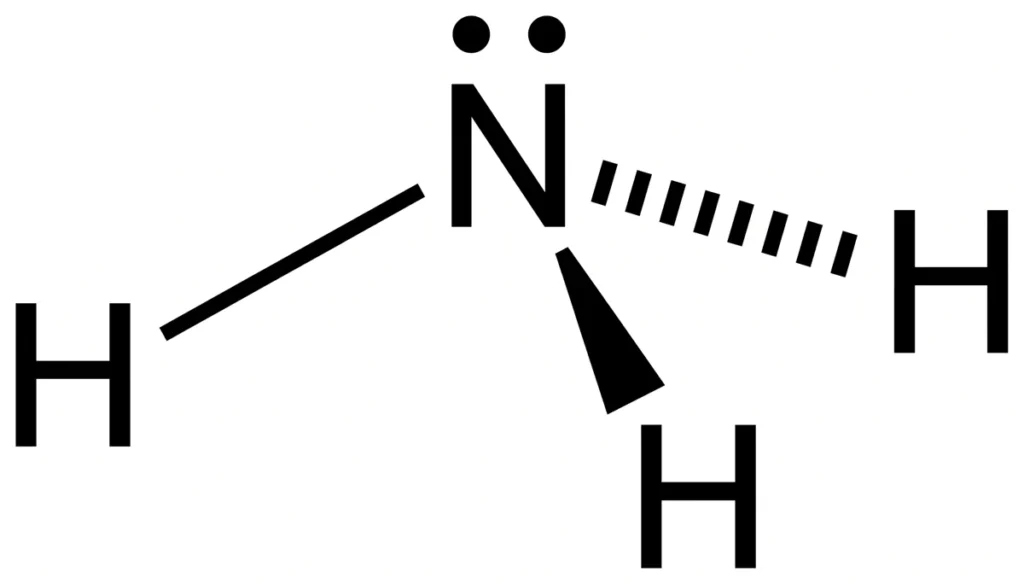
Molecular Structure (NH₃)
| Chemical Name | Ammonia |
| Formula | NH₃ |
| CAS Number | 7664-41-7 |
| Molecular Weight | 17.03 g/mol |
| IUPAC Name | Azane |
| Synonyms | Ammonia gas, Anhydrous ammonia, Azane |
Physical & Chemical Properties
⚗️AppearanceColorless gas
👃OdorSharp, pungent
🌡️Melting Point-77.7 °C
🔥Boiling Point-33.3 °C
⚖️Density0.6818 g/cm³ (liquid at its boiling point)
💧SolubilityVery soluble in water (34 g per 100 g at 20 °C)
🧪pH (in solution)11.6 (1 N aqueous solution)
✨Flash PointNo flash point (autoignition 651 °C)
🛡️StabilityStable under normal conditions; corrosive gas, stored liquefied under pressure
📊LogP (octanol/water)Not applicable
Uses & Applications
🧪
Fertilizers
Primary nitrogen source for urea, ammonium nitrate and ammonium sulfate production
🏭
Refrigeration
Industrial refrigerant (R717) for cold storage and ice plants
💧
Chemical Industry
Feedstock for nitric acid and nylon intermediates
🔬
Water Treatment
Forms chloramines for disinfection and controls pH.
Safety & Handling
🛡️ Safety & Handling
- Corrosive gas; inhalation can cause severe lung damage. Contact with liquid ammonia causes frostbite and chemical burns. Store cylinders upright in a cool, ventilated area away from heat. Use gas detection, gloves, goggles and respiratory protection when handling leaks.
📄
Safety Data Sheet (SDS)
View the official SDS for detailed safety information.
SDS available on request⚠️ Educational information only — always consult the chemical-specific Safety Data Sheet (SDS) and qualified professionals before handling.
Related Articles
View All Articles →

📖
Citric Acid vs Muriatic Acid: Key Differences, Strength and Best Uses
Citric acid vs muriatic acid is a choice between a mild organic acid and one of the strongest, cheapest mineral […]
Read Full Article →