
Home › Chemical Directory › Inorganic Chemicals › Water
Water (H₂O)
Properties, Uses, Applications and Safety Information
Universal solvent; essential for life, laboratories and industry.
⚗️FormulaH₂O
🔗CAS Number7732-18-5
⚛️Molecular Weight18.02 g/mol
Chemical Identification
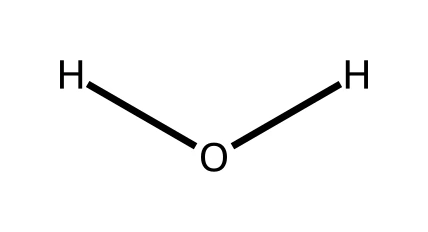
Molecular Structure (H₂O)
| Chemical Name | Water |
| Formula | H₂O |
| CAS Number | 7732-18-5 |
| Molecular Weight | 18.02 g/mol |
| IUPAC Name | Oxidane |
| Synonyms | Dihydrogen oxide, Aqua |
Physical & Chemical Properties
⚗️AppearanceClear colorless liquid
👃OdorOdorless
🌡️Melting Point0 °C
🔥Boiling Point100 °C (at 760 mmHg)
⚖️Density1.00 g/cm³ (at 4 °C)
💧SolubilityCompletely miscible (universal solvent)
🧪pH (in solution)7.0 (neutral, at 25 °C)
✨Flash PointNot applicable (non-flammable)
🛡️StabilityStable under normal conditions
📊LogP (octanol/water)-1.38
Uses & Applications
🧪
Laboratory
Solvent, reagent preparation and washing in analysis
🏭
Industry
Boiler feed water, cooling systems and steam generation
💧
Pharmaceuticals
Purified water base for formulations and cleaning
🔬
Agriculture
Irrigation and livestock watering.
Safety & Handling
🛡️ Safety & Handling
- Non-hazardous; no special handling is required. Use the appropriate grade (distilled or deionized) for laboratory accuracy. Store in clean, sealed containers to prevent contamination. No protective equipment is required under normal conditions.
📄
Safety Data Sheet (SDS)
View the official SDS for detailed safety information.
SDS available on request⚠️ Educational information only — always consult the chemical-specific Safety Data Sheet (SDS) and qualified professionals before handling.
Related Articles
View All Articles →


📖
Citric Acid vs Muriatic Acid: Key Differences, Strength and Best Uses
Citric acid vs muriatic acid is a choice between a mild organic acid and one of the strongest, cheapest mineral […]
Read Full Article →