Home › Chemical Directory › Inorganic Chemicals › Sodium Chloride
Sodium Chloride (NaCl)
Properties, Uses, Applications and Safety Information
Common table salt; widely used in food, chemical processing and de-icing.
⚗️FormulaNaCl
🔗CAS Number7647-14-5
⚛️Molecular Weight58.44 g/mol
Chemical Identification
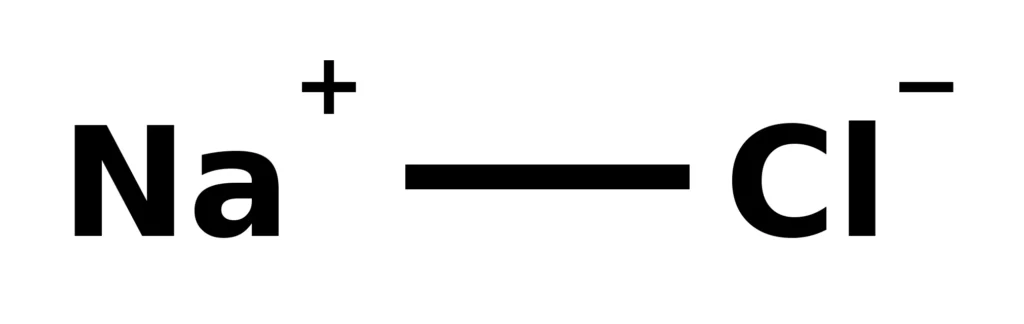
Molecular Structure (NaCl)
| Chemical Name | Sodium Chloride |
| Formula | NaCl |
| CAS Number | 7647-14-5 |
| Molecular Weight | 58.44 g/mol |
| IUPAC Name | Sodium chloride |
| Synonyms | Table salt, Common salt, Halite |
Physical & Chemical Properties
⚗️AppearanceWhite crystalline solid
👃OdorOdorless
🌡️Melting Point801 °C
🔥Boiling Point1,465 °C
⚖️Density2.17 g/cm³ (at 25 °C)
💧Solubility36 g per 100 g water (at 25 °C)
🧪pH (in solution)About 7 (neutral solution)
✨Flash PointNot applicable (non-flammable)
🛡️StabilityStable under normal conditions
📊LogP (octanol/water)Not applicable (ionic compound)
Uses & Applications
🧪
Food Industry
Seasoning and food preservation
🏭
Chemical Industry
Feedstock for chlorine, caustic soda and soda ash in the chlor-alkali process
💧
De-icing
Melts ice and snow on roads and pavements
🔬
Water Treatment
Regenerates ion-exchange water softeners.
Safety & Handling
🛡️ Safety & Handling
- Low hazard; large ingested quantities are harmful. Dust may mildly irritate the eyes. Store dry; its solutions corrode base metals over time. Basic hygiene and eye protection are sufficient for bulk handling.
📄
Safety Data Sheet (SDS)
View the official SDS for detailed safety information.
SDS available on request⚠️ Educational information only — always consult the chemical-specific Safety Data Sheet (SDS) and qualified professionals before handling.
Related Articles
View All Articles →


📖
Citric Acid vs Muriatic Acid: Key Differences, Strength and Best Uses
Citric acid vs muriatic acid is a choice between a mild organic acid and one of the strongest, cheapest mineral […]
Read Full Article →