Borax (Na2B4O7·10H2O)
Properties, Uses, Applications and Safety Information
A naturally occurring boron mineral salt used in detergents, glass making and as a metallurgical flux; sold as a white crystalline powder.
Chemical Identification

| Chemical Name | Borax |
| Formula | Na2B4O7·10H2O |
| CAS Number | 1303-96-4 |
| Molecular Weight | 381.37 g/mol |
| IUPAC Name | Disodium tetraborate decahydrate |
| Synonyms | Sodium tetraborate decahydrate, Sodium borate decahydrate, Borax decahydrate |
Physical & Chemical Properties
Uses & Applications
Cleaning & Laundry
Detergent booster and water softener in laundry and household cleaning products
Glass & Ceramics
Flux that lowers melting temperature in borosilicate glass, enamels and glazes
Metallurgy
Flux for soldering and welding that dissolves metal oxides from joints
Buffers & Agriculture
pH buffer in laboratories and a boron micronutrient source for boron-deficient soils.
Safety & Handling
🛡️ Safety & Handling
- Harmful if swallowed; classified in the EU as possibly damaging fertility and the unborn child. Avoid breathing dust and avoid contact with eyes. Keep away from food, drink and animal feed; keep out of reach of children. Store dry in a cool place; wear gloves and a dust mask for bulk handling.
Safety Data Sheet (SDS)
View the official SDS for detailed safety information.
SDS available on request⚠️ Educational information only — always consult the chemical-specific Safety Data Sheet (SDS) and qualified professionals before handling.
Related Articles
View All Articles →

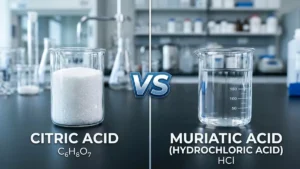
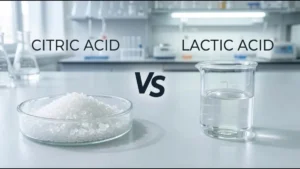
What Not to Mix With Citric Acid
Citric acid (C₆H₈O₇, CAS 77-92-9) is one of the safer acids you can buy. It is also easy to misuse, […]
Read Full Article →