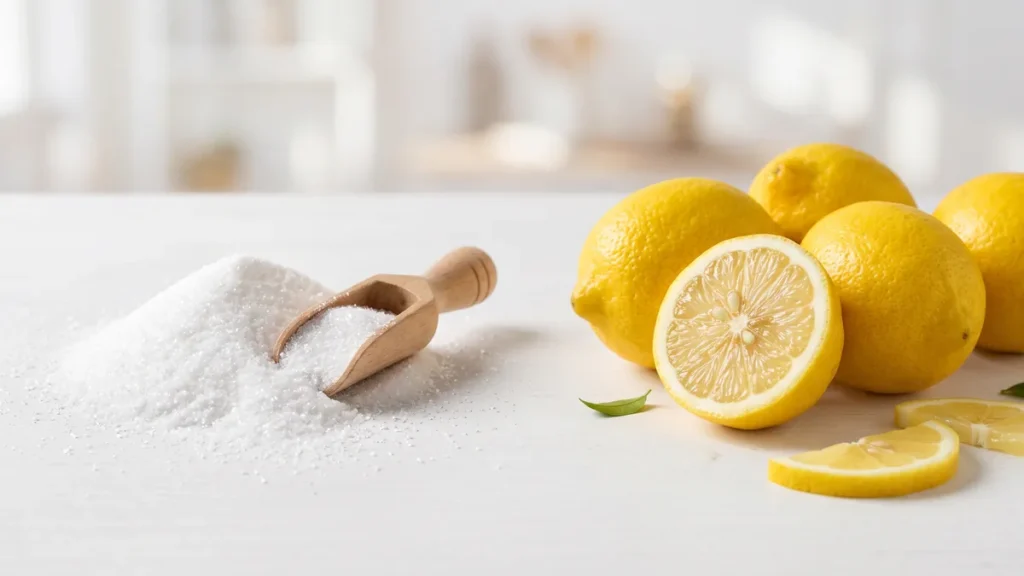
The citric acid vs lemon juice question comes up in kitchens, labs and production lines for one reason: lemon juice contains citric acid, but it is mostly water, while the powder is the acid on its own. This guide is about substitution: when lemon juice can stand in for the powder and when it can’t. It is not about extraction, which is what making citric acid at home covers, and it assumes you already know citric acid in its pure, crystalline form, the same acid that lemon juice only dilutes.
What Is in Each Product
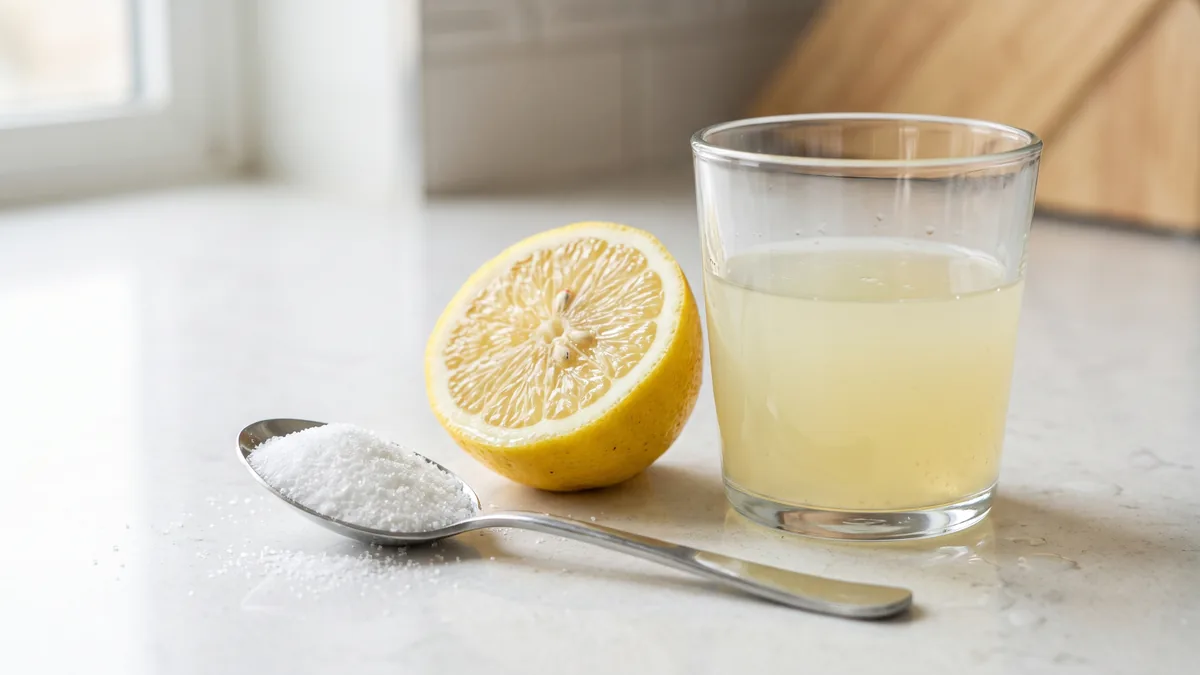
Citric acid powder is a white crystalline solid with the formula C₆H₈O₇ (anhydrous molar mass 192.12 g/mol, CAS 77-92-9). It carries the food additive code E330. It is sold in two forms: anhydrous and monohydrate (C₆H₈O₇·H₂O, 210.14 g/mol, CAS 5949-29-1).
The anhydrous form is about 99.5 to 100.5% acid. The monohydrate carries roughly 8.6% bound water, so it is slightly weaker by weight. The two forms differ enough in storage and blending behavior that the anhydrous form earns its own breakdown.
Lemon juice is about 90% water. The rest is citric acid plus smaller amounts of sugars, ascorbic acid (vitamin C), malic acid, potassium and flavor compounds such as limonene. Citric acid is the main acid, but it is only a minor share of the total volume.
This also clears up a common myth. Citric acid and vitamin C are different molecules. Lemon juice contains both, but the powder contains no vitamin C.
How Much Citric Acid Is in Lemon Juice?
Lemon juice contains about 5 to 6% citric acid (roughly 50 to 60 g per liter). Fresh juice varies with variety, ripeness and season. Eureka and Lisbon lemons run higher, while Meyer lemons run lower.
Bottled lemon juice is usually reconstituted from concentrate and standardized. It often contains a preservative such as sodium metabisulfite, which is why labels carry a sulfite warning. That standardization matters a lot for canning, as you will see below.
Citric Acid vs Lemon Juice: Head-to-Head Comparison

| Property | Citric acid powder | Bottled lemon juice | Fresh lemon juice |
|---|---|---|---|
| Citric acid content | 99.5 to 100.5% (anhydrous) | About 5 to 6% | About 5 to 6%, varies by fruit |
| pH | About 2.2 for a 1% solution; about 1.8 to 2.0 for 5% | About 2.0 to 2.6 | About 2.0 to 2.6 |
| Consistency | Same every batch | High, standardized | Low |
| Flavor | Clean, neutral sour | Lemon, slightly cooked | Bright, fresh lemon |
| Other components | None | Water, sugars, preservative | Water, sugars, vitamin C, oils |
| Shelf life | About 2 to 3 years sealed and dry | Months unopened; weeks refrigerated once opened (check the label) | 2 to 4 days refrigerated |
| Cost per gram of acid | Lowest | Several times the powder | Highest, often ten times or more |
| Best for | Canning, cleaning, crafts, formulation | Canning where specified, cooking | Flavor in food and drinks |
The cost row explains why industry buyers rarely use juice for acidity. You are paying for water. At typical prices, the powder works out to a small fraction of the cost per gram of acid.
How Much Lemon Juice Replaces Citric Acid Powder?
You can calculate a rough swap from the acid content. The math below assumes 1 teaspoon of powder weighs about 4.7 g (it ranges from 4.5 to 5 g with granule size). It also assumes juice at 5 to 6% (50 to 60 g/L) and 1 tablespoon equal to 14.8 mL.
| Citric acid powder | Weight | Lemon juice needed |
|---|---|---|
| ¼ teaspoon | About 1.2 g | About 1.5 tablespoons |
| ½ teaspoon | About 2.4 g | About 3 tablespoons |
| 1 teaspoon | About 4.7 g | About 5 to 6 tablespoons (⅓ cup) |
| 1 tablespoon | About 14 g | About 1 to 1¼ cups |
Here is the worked example for 1 teaspoon: 4.7 g ÷ 0.06 g/mL = 78 mL, and 4.7 g ÷ 0.05 g/mL = 94 mL. That is 5.3 to 6.4 tablespoons.
Two practical points follow from this. A swap adds a lot of water, so cut other liquids in the recipe. It also adds lemon flavor, which may not suit every dish.
Do not use this table for canning. Tested canning ratios come from lab testing, not from this calculation, so the two will not match. We cover that next.
Citric Acid vs Lemon Juice for Canning
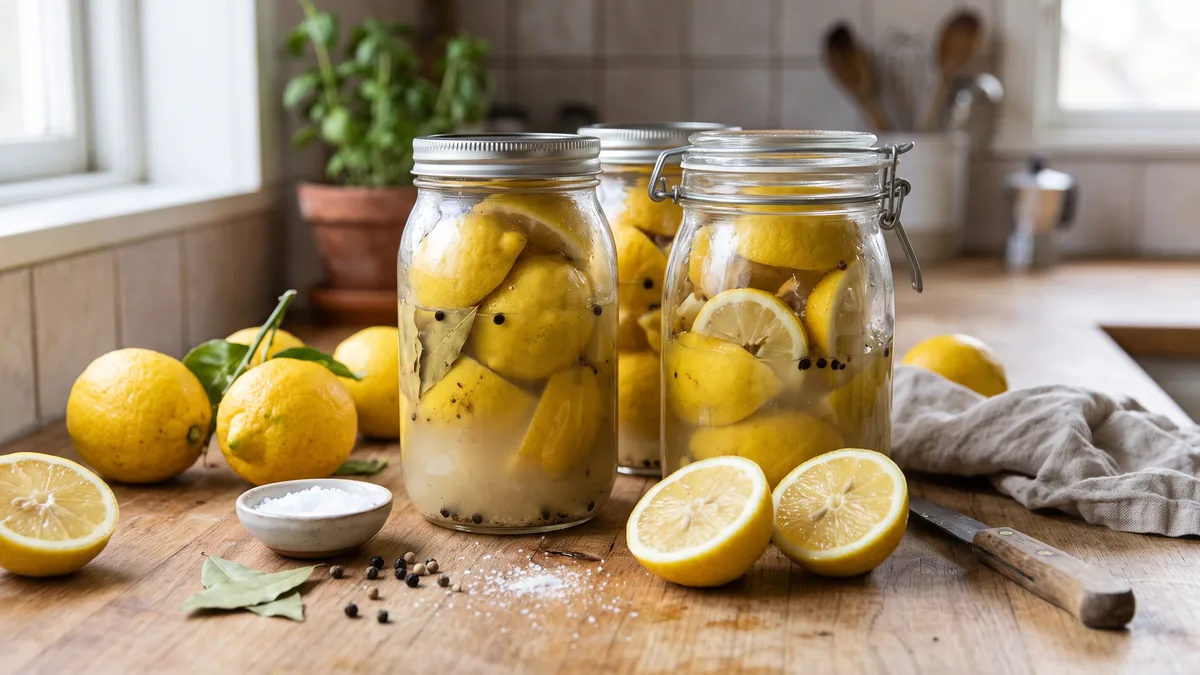
This is the one use where guessing is unsafe. Tomatoes and some other foods sit close to the pH line for safe water bath canning, so tested recipes add a measured amount of acid. Always follow your tested recipe exactly.
USDA and National Center for Home Food Preservation (NCHFP) guidance for tomatoes calls for either of these (always confirm against the current tested recipe you are using):
- Per quart jar: 2 tablespoons bottled lemon juice or ½ teaspoon citric acid
- Per pint jar: 1 tablespoon bottled lemon juice or ¼ teaspoon citric acid
Notice that these amounts are not the same as the equivalence table above. That is intentional. Use the canning numbers only for canning.
Why bottled juice: Tested recipes specify bottled lemon juice because its acidity is standardized. Fresh juice varies from fruit to fruit, so it can’t guarantee the same acid in every jar.
Where powder is specified: Some tested recipes list citric acid because it adds acidity without changing flavor. If a recipe names only one acidulant, use that one unless your tested source lists the swap.
Never reduce the amount, and never replace either with vinegar, dried lemon powder or fresh juice. None of these has been tested as a like-for-like substitute in those recipes.
Cooking and Drinks
In the kitchen, lemon juice often wins, because flavor is the point. Think lemonade, dressings, marinades and fish. Citric acid cannot give you lemon aroma.
Citric acid wins when you want sourness without flavor or extra water. Sour candy coatings, sorbets, jams (for gel set and pH), fruit-browning dips and clean-tasting beverages all benefit. A small pinch of powder also brightens soups and sauces without thinning them.
For cheese making, powder gives precise, repeatable acidification. That matters in recipes like fresh mozzarella, where a few drops of extra liquid or acid can change the curd.
Cleaning and Descaling
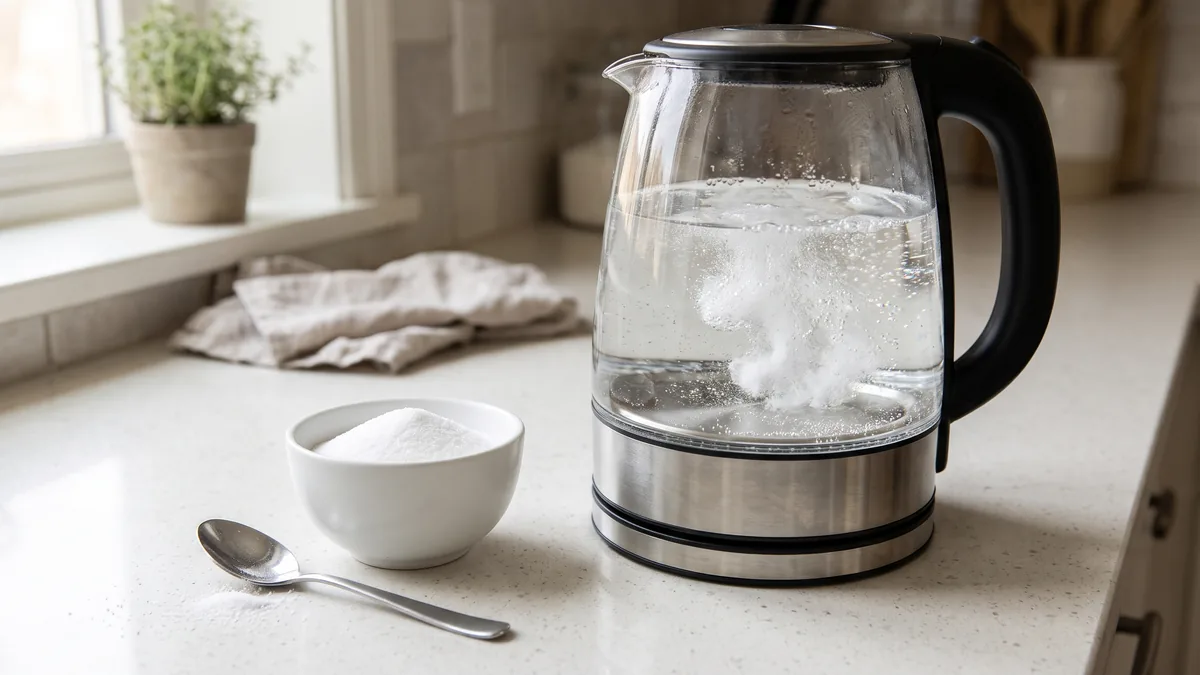
For limescale, powder is the practical choice. Citric acid reacts with calcium carbonate scale and dissolves it, holding the calcium as citrate in the solution so the residue rinses away. You control the concentration by weighing it.
A typical working solution is about 2.5 to 5% (25 to 50 g per liter) for light scale. Heavy scale may need up to about 10%. Use warm water, run the cycle, then rinse well.
Lemon juice is a weak, variable cleaner. Its 5 to 6% acid is diluted further once you add water, and its sugars leave a sticky residue. It works for light tasks like freshening a cutting board or a microwave.
Some safety rules apply to both:
- Avoid sensitive surfaces: Do not use acid on marble, granite or other natural stone, because it etches them.
- Check metals: Prolonged contact can dull aluminum.
- Never mix with bleach: Acid plus chlorine bleach releases toxic chlorine gas.
Bath Bombs and Effervescent Products
Lemon juice does not work here. A bath bomb relies on dry citric acid reacting with sodium bicarbonate once it hits the bath water. Juice is mostly water, so it starts the reaction early and ruins the mix.
Use fine, dry powder. A common starting ratio is about 2 parts sodium bicarbonate to 1 part citric acid by weight. Bind the mix with a light spray of witch hazel or a small amount of oil.
Powder humidity matters. Store it airtight, because moisture in the air makes anhydrous citric acid clump.
Skincare and Formulation Note
In cosmetics, citric acid serves as a pH adjuster and, at low levels, as a mild alpha hydroxy acid (AHA). Formulators measure the final pH and use cosmetic-grade ingredients.
Do not put lemon juice on skin. It is acidic and unbuffered, and it can cause phototoxic reactions (burns or dark patches) when skin is then exposed to sunlight. It also has no preservation system, so it spoils quickly.
If you are developing a product, work from a COA and a documented pH target. Patch test any finished product.
When Lemon Juice Wins and When Citric Acid Powder Wins
| Situation | Better choice | Why |
|---|---|---|
| Lemonade, dressings, seafood | Lemon juice | You want the flavor |
| Tomato canning | Whichever the tested recipe names | Safety depends on the tested amount |
| Descaling kettles and machines | Citric acid powder | Controlled strength, no residue |
| Bath bombs and fizzy crafts | Citric acid powder | Must stay dry |
| Sour candy, clean-tasting drinks | Citric acid powder | Sour without lemon flavor or water |
| Bulk, repeat or commercial use | Citric acid powder | Consistent and cheaper per gram of acid |
| Light surface freshening | Lemon juice | Mild, already on hand |
Buying Food Grade Citric Acid Powder
For consistent results, buy food grade powder (USP or FCC) rather than technical grade. Technical grade is meant for industrial uses and is not labeled for food contact or consumption.
Ask for a certificate of analysis (COA) with each lot. Check these points:
- Assay: Usually 99.5 to 100.5% on a dry basis
- Water content: About 0.5% maximum for anhydrous and about 7.5 to 9.0% for monohydrate
- Heavy metals and residue: Within the stated limits
- Particle size: Fine for crafts and dissolving, coarser for easier handling
Forms, specifications and available grades for the powder are listed under citric acid in the Chemvexa directory.
Safety and Handling for Citric Acid Powder
Citric acid is a common food ingredient, but the concentrated powder is an irritant. It is classified as causing serious eye irritation (H319). Always read the SDS.
- PPE: Wear safety glasses or goggles and gloves. Use a dust mask when pouring fine powder.
- First response: For eye contact, rinse with water for at least 15 minutes. For skin contact, rinse well.
- Storage: Keep it in a sealed container in a cool, dry place, away from children and food prep surfaces.
- Incompatibilities: Keep it away from strong bases, oxidizers, reducing agents and bleach.
- Disposal: Dilute small amounts with water and neutralize with baking soda before rinsing down the drain, following local rules.
Juice belongs to the kitchen’s judgment calls, and powder to the jobs where the same result has to happen every single time. Knowing which of those two you are really doing is most of the decision. For the powder side, that is what Chemvexa is: a chemical platform cataloguing chemical products with their grades, specifications and safety notes, plus guides that test everyday questions like this one against the chemistry.
FAQs
1. How much citric acid is in lemon juice?
About 5 to 6%, or roughly 50 to 60 g per liter. Fresh juice varies by lemon variety and ripeness. Bottled juice is standardized to a more consistent level.
2. Can I use lemon juice instead of citric acid for canning?
Only if your tested recipe allows it, and then use bottled lemon juice in the stated amount. Do not use fresh juice or change the ratio. Follow NCHFP or USDA guidance exactly.
3. Is the citric acid in lemons the same as the powder?
Yes, it is the same molecule, C₆H₈O₇. Commercial citric acid is made mainly by fermentation of sugars with the mold Aspergillus niger, then purified and crystallized. The difference is that the powder is pure, while the juice is a diluted mixture.
4. Is citric acid the same as vitamin C?
No. Vitamin C is ascorbic acid, a different compound. Lemon juice contains both, but citric acid powder has no vitamin C.
5. Can I use lemon juice in bath bombs?
No. The water in juice triggers the fizzing reaction too early and weakens the finished bomb. Use dry citric acid powder and bind with a light spray of witch hazel or oil.