
Yes, citric acid is a preservative, but a mild one. It lowers pH, which slows bacteria, and it binds metal ions that cause browning and rancidity. It works best with other protection, such as heat, cold or a stronger preservative, not as a standalone mold and yeast killer.
Citric acid (C₆H₈O₇, CAS 77-92-9) is a weak organic acid found naturally in citrus fruit. It is also made at industrial scale and sold as a white crystalline powder. Our complete guide to citric acid covers its full chemistry, so this article focuses on one question: how well does it actually preserve food?
What Counts as a Preservative?
The FDA treats a chemical as a preservative if it tends to prevent or slow the spoilage of food. Spoilage can come from microbes, such as bacteria and molds, or from oxidation, which causes browning and rancid flavors. Citric acid slows both, so it fits the definition. Salt, sugar, vinegar and spices are excluded from this definition, but citric acid is not.
This matters for labels. When citric acid is added to protect food, the US label should state its job, for example “citric acid (to protect color).” Class-action suits have argued that citric acid acts as a preservative even when a brand added it only for tartness. Food makers should record why they add it and at what level, so the purpose is clear if a label is ever questioned.
How Citric Acid Preserves Food
Citric acid protects food through three separate actions. Each one targets a different cause of spoilage, which is why it helps in so many products. The list below shows how each action works and what it does for the food.
- Lowers pH: Citric acid is a triprotic weak acid with pKa values near 3.13, 4.76 and 6.40. A 1% solution sits near pH 2.2, and most bacteria grow poorly below pH 4.6.
- Stresses microbes: In acidic food, much of the acid stays undissociated and can slip through a microbe’s cell membrane. Inside the cell it releases H⁺ ions, and that stress slows growth.
- Binds metals: As a chelating agent, it grabs Ca²⁺, Mg²⁺, Fe³⁺ and Cu²⁺, which microbes and spoilage enzymes need. This also weakens the outer membrane of Gram-negative bacteria such as Salmonella and E. coli.
Citric acid is not a true antioxidant on its own. Instead, it supports real antioxidants such as ascorbic acid by removing the metal ions that start oxidation. This is why fruit browns more slowly and oils turn rancid later when citric acid is part of the formula.
Where Citric Acid Falls Short
Many yeasts and molds handle acid well, so citric acid is weaker against them than sorbic or benzoic acid. It also does little in low-acid, high-moisture foods unless enough is added to reach a tested pH. A pinch in a pot of soup will not protect it, and the table below shows how other preservatives compare.
| Preservative | Main action | Works best at | Strong against |
| Citric acid | Acidifier, chelator | pH below about 4 | Bacteria, oxidation |
| Ascorbic acid | Antioxidant | Wide range | Browning, oxidation |
| Potassium sorbate | Antimicrobial | pH below about 6 | Yeasts, molds |
| Sodium benzoate | Antimicrobial | pH below about 4.5 | Yeasts, some bacteria |
| Acetic acid | Acidifier, antimicrobial | pH below about 4.5 | Bacteria, yeasts |
In practice, citric acid sets the pH and the partner preservative handles molds and yeasts. Blends like this give wider protection at lower levels of each ingredient, which also helps taste and cost. The right pairing depends on the product’s pH, water activity and shelf-life target.
Where It Is Used
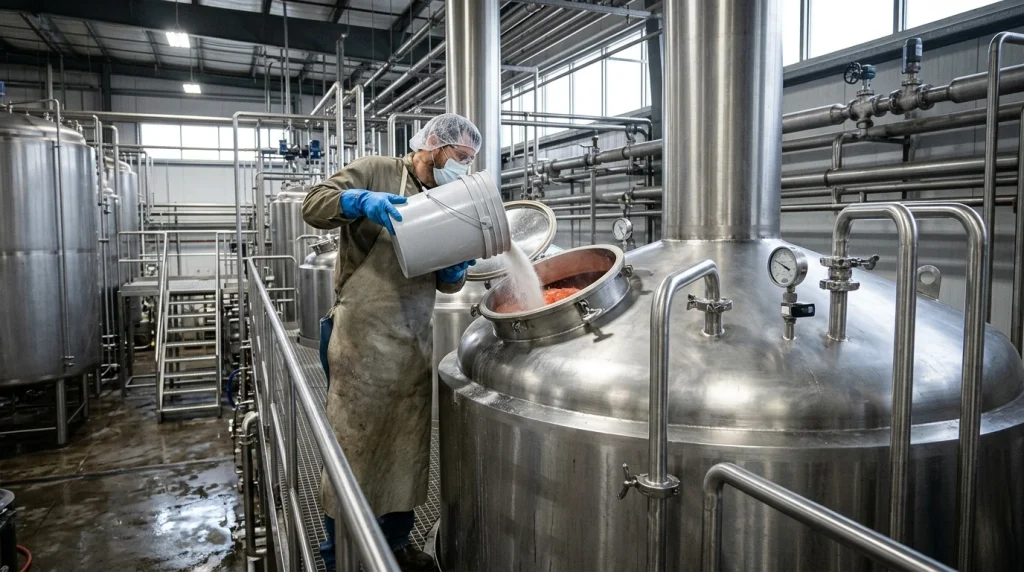
Because citric acid does several jobs at once, it appears across many industries. Food and beverage makers use it most, but pharmaceutical and personal care formulators rely on it too. The list below shows the main uses and the role it plays in each.
- Beverages: Sets sourness and pH, and supports the main preservative.
- Jams and jellies: Brings pH into the 2.8 to 3.5 range for good gelling and stability.
- Canning: Acidifies tomatoes and low-acid fruit so they can be processed safely.
- Fresh-cut produce: Used in dips to slow browning of apples, pears and avocado.
- Oils and fats: Binds trace metals that cause rancidity.
- Cosmetics: Adjusts pH and binds metals, but never replaces a broad-spectrum preservative.
- Pharmaceuticals: Buffers solutions, stabilizes active ingredients and is used in citrate solutions for stored blood.
How Much to Use
The right amount depends on the product, its starting pH and how long it must last. The levels below are commonly accepted starting points, not fixed rules. Always test the final pH and stability in your own product, because water activity and the microbes involved change the result.
| Use | Typical level | Note |
| Beverages | about 0.05% to 0.3% | Adjust for taste and target pH |
| Fresh-cut fruit dip | about 0.5% to 1% (5 to 10 g/L) | Dip briefly, then drain |
| Canned tomatoes | 1/4 tsp per pint, 1/2 tsp per quart | Tested home-canning amounts |
| Cosmetics | usually under 1% | Check final pH and stability |
For canning, use the exact tested amounts. Acidity is the safety margin against Clostridium botulinum, so never reduce it for flavor, and never judge safety by taste. Home canners should follow a tested recipe from a trusted source such as the National Center for Home Food Preservation.
Choosing the Right Grade
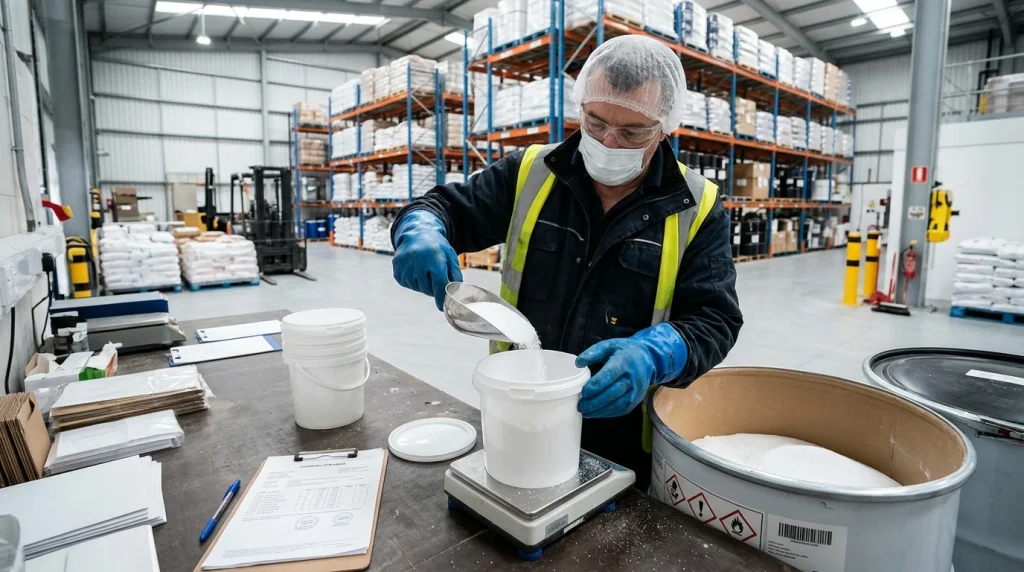
Once you know the dose, pick the right grade. The grade decides where you can legally and safely use the product, and the form changes how much you need to weigh out. Food, pharma and industrial buyers each need different specifications, so match the grade to the end use before you order.
| Grade or form | Best for | Note |
| Food grade (FCC) | Food and beverage. | Standard for preservation work. |
| USP | Pharma and personal care. | Meets pharmacopeia standards. |
| Technical | Cleaning, industrial. | Not for food contact. |
| Anhydrous | Most formulations. | About 100% citric acid. |
| Monohydrate | Some recipes. | About 8.6% water, so use about 1.09 g per 1 g anhydrous. |
Using technical grade in food is a compliance problem, not just a quality issue. Always request the spec sheet and certificate of analysis with your order. These documents confirm purity, heavy metal limits and the exact grade you are buying.
Safety and Handling
In the US, citric acid is Generally Recognized as Safe (GRAS) under 21 CFR 184.1033, and in the EU it is E330. Use is limited by good manufacturing practice rather than a fixed cap. Very acidic drinks can wear down tooth enamel over time, so moderation still matters for consumers. The dry powder is where handling care matters, so follow these basics:
- Protect your eyes: The powder can cause serious eye irritation, so wear goggles.
- Reduce dust: Wear gloves and a dust mask when moving bulk bags.
- Store dry: Use a closed container in a cool, dry place, because the powder absorbs moisture and cakes.
- Keep it apart: Store away from strong oxidizers, strong bases, reducing agents and metal powders.
- Clean spills: Sweep without raising dust, then rinse the residue with water and dispose of it under local rules.
Concentrated solutions can also attack some metals, so check that tanks and pipes are compatible. Your supplier’s SDS gives the exact hazard, first aid and disposal details for your grade, so keep a copy where staff can reach it.
Citric acid is a useful food preservative that helps control pH, slow microbial growth and prevent oxidation, although it works best alongside other preservation methods. Choosing the right grade and quantity is essential for safe and effective results. Whether you need citric acid for food processing, beverages or industrial applications, ChemVexa offers citric acid to meet your chemical supply requirements. Contact ChemVexa to source the right grade for your needs.
FAQs
1. Is citric acid bad for you?
No, not at normal food levels. The FDA classes it as GRAS, and your body makes and uses citric acid naturally in the Krebs cycle. Large amounts can cause stomach upset or mouth irritation, and sour drinks can wear down tooth enamel, so rinse your mouth with water afterward.
2. Is the citric acid in food natural or artificial?
Both answers get used, but the process is simple. Today, it is made by fermentation, where the mold Aspergillus niger feeds on sugars from corn or molasses. The mold is then filtered out, and the acid is purified and crystallized. Being made with this fungus does not make the final product black mold. The finished molecule is chemically identical to the citric acid in lemons.
3. Is citric acid the same as vitamin C?
No. Citric acid is C₆H₈O₇ and has no vitamin activity, while vitamin C is ascorbic acid, C₆H₈O₆. Lemons contain both, which is why people mix them up. Processors often blend the two in anti-browning dips because citric acid lowers pH and ascorbic acid scavenges oxygen.
4. Can I use citric acid instead of lemon juice?
For canning, yes, in tested amounts. The common guidance is 1/4 tsp citric acid in place of 1 tbsp bottled lemon juice. Fresh lemon juice has about 5% to 6% citric acid, but the level varies from fruit to fruit, so use bottled juice or citric acid when safety depends on acidity.